



Silica gel litter — the translucent white granules, sometimes mixed with blue or green indicator beads — is the most misunderstood format in the category. It is not sand, and it does not clump. It is porous amorphous silica gel, the same desiccant material found in the little “do not eat” packets, manufactured into a litter-grade granule.
The mechanism
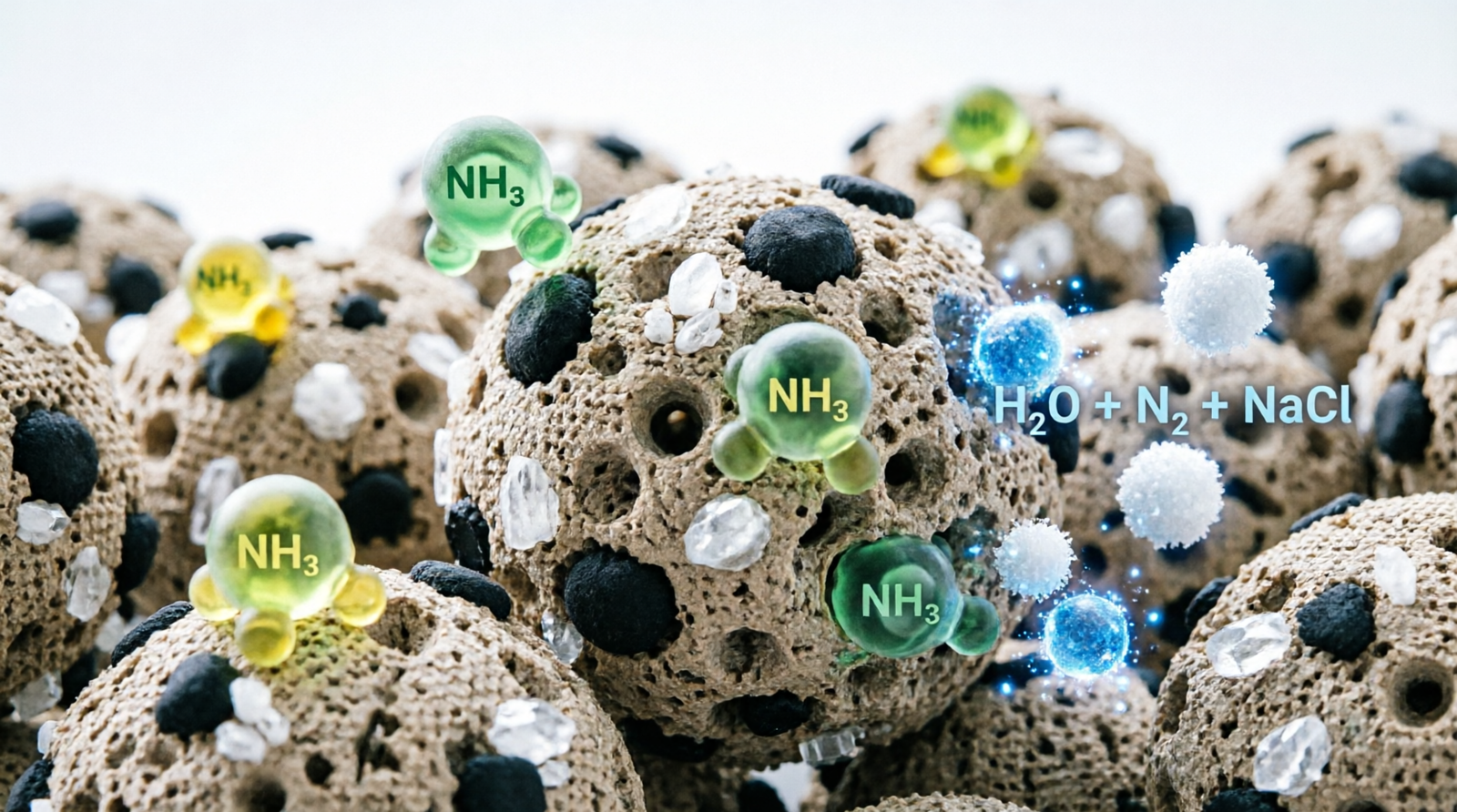
Each granule is riddled with microscopic pores that give a single gram an enormous internal surface area. When a cat urinates, the granule absorbs the liquid and traps moisture inside the pore structure, then releases the water slowly as vapor. What stays behind is the odor compound, locked in the granule. This is why silica controls smell so well: ammonia and volatile compounds are adsorbed, not just buried.
The trade-offs buyers should understand
- Longevity: one cat, one bag, roughly a month. Cost per month is competitive with premium clumping clay despite a higher shelf price.
- No scooping of liquid: you only remove solid waste and stir the bed. Less daily effort.
- Saturation point: once the pores are full, odor control drops sharply and the granules may look wet or yellow. Buyers need clear “replace when” guidance on pack.
- Texture: larger, harder granules than clay. Some cats reject the feel, which matters for litter-box acceptance testing before a full order.
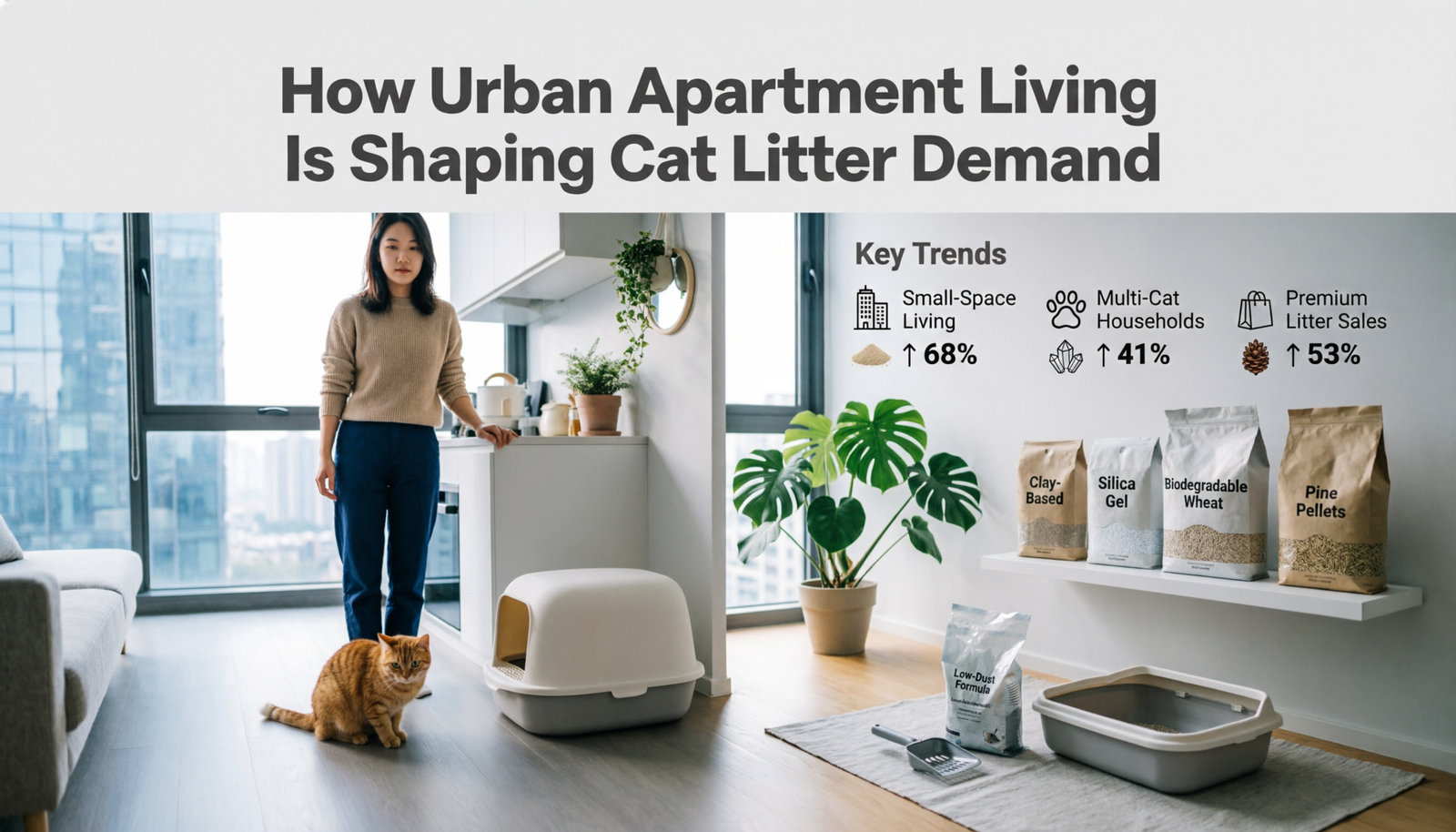
- Multi-cat homes: silica saturates faster with more than one cat, so clumping clay or a hybrid often performs better there.
What this means for private-label buyers
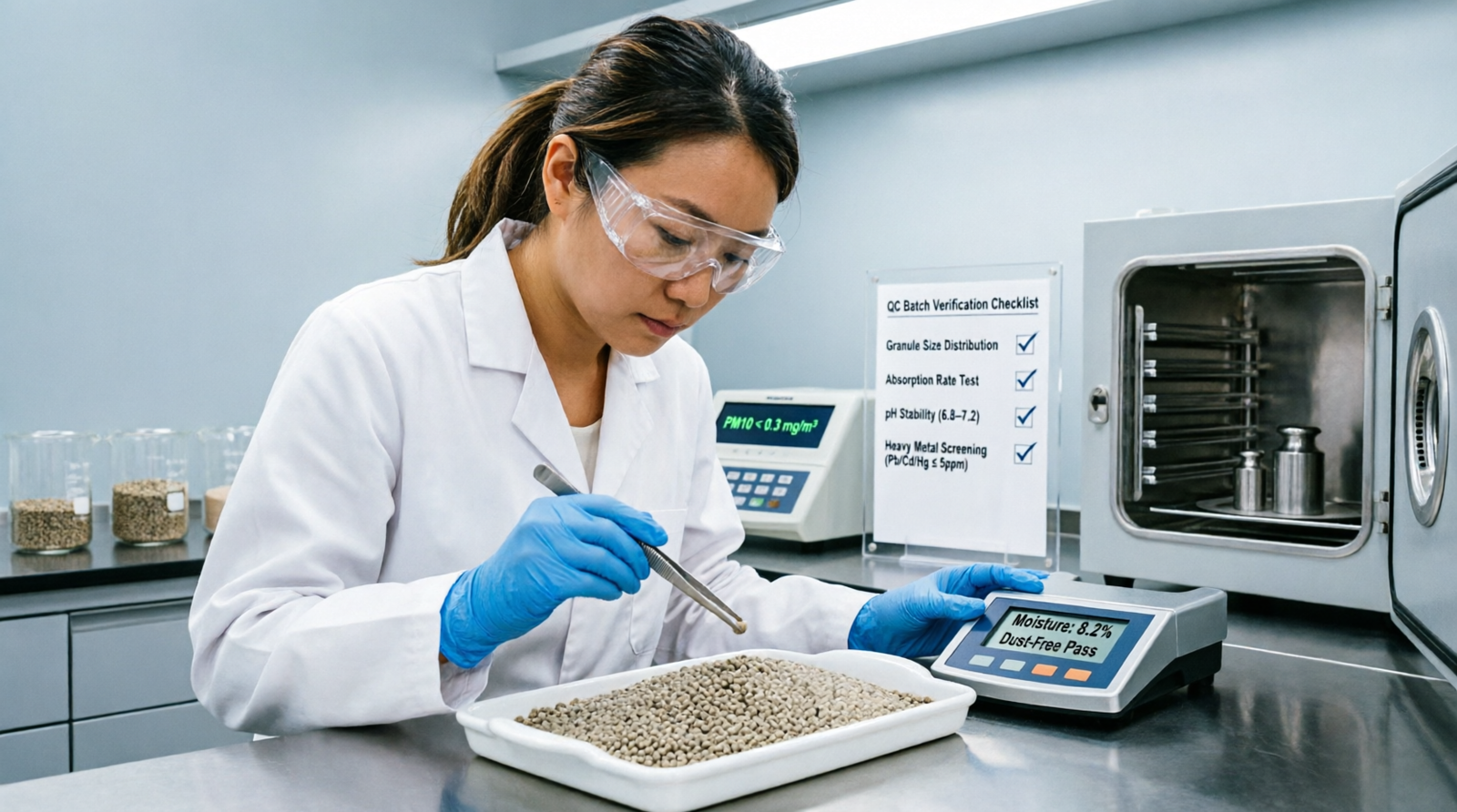
Silica is a strong fit for a premium, low-maintenance, single-cat SKU. Key quality factors to specify with your manufacturer: granule hardness and dust level, pore capacity (absorption rate by weight), whether to include color-change saturation indicator beads, granule size consistency, and whether the product is scented. Ask for absorption and odor-retention test data, not just a spec sheet, and always run a home-use acceptance trial with real cats before committing to volume.