



For a new pet brand, the litter inside the bag gets most of the attention during development. But on a store shelf or a product listing page, the packaging is what customers see first. It also affects freight cost, shelf life and how your product survives the trip from factory to warehouse. Here’s a practical overview of the packaging decisions you’ll make when sourcing private-label cat litter from an OEM/ODM manufacturer.
Common Bag and Container Types
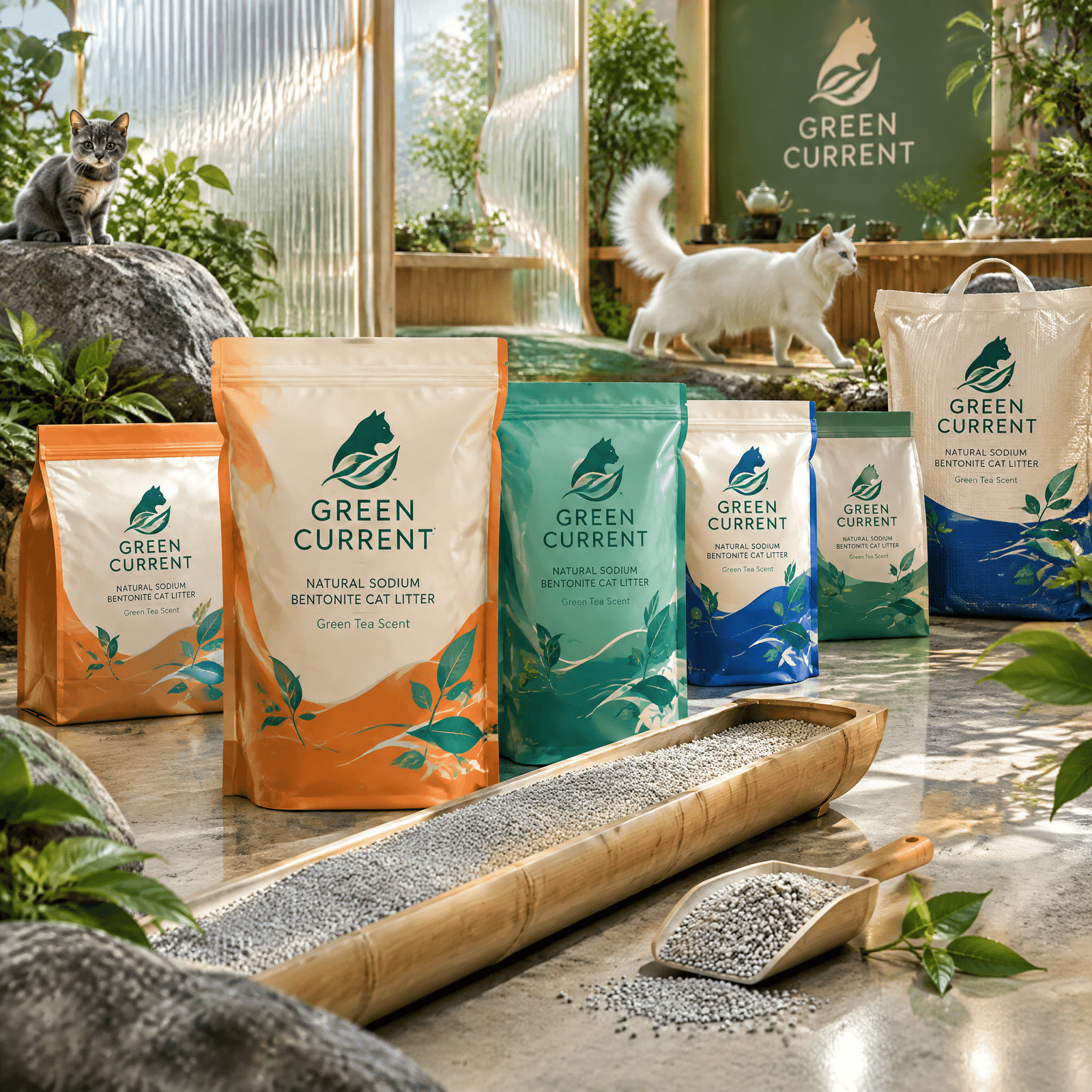
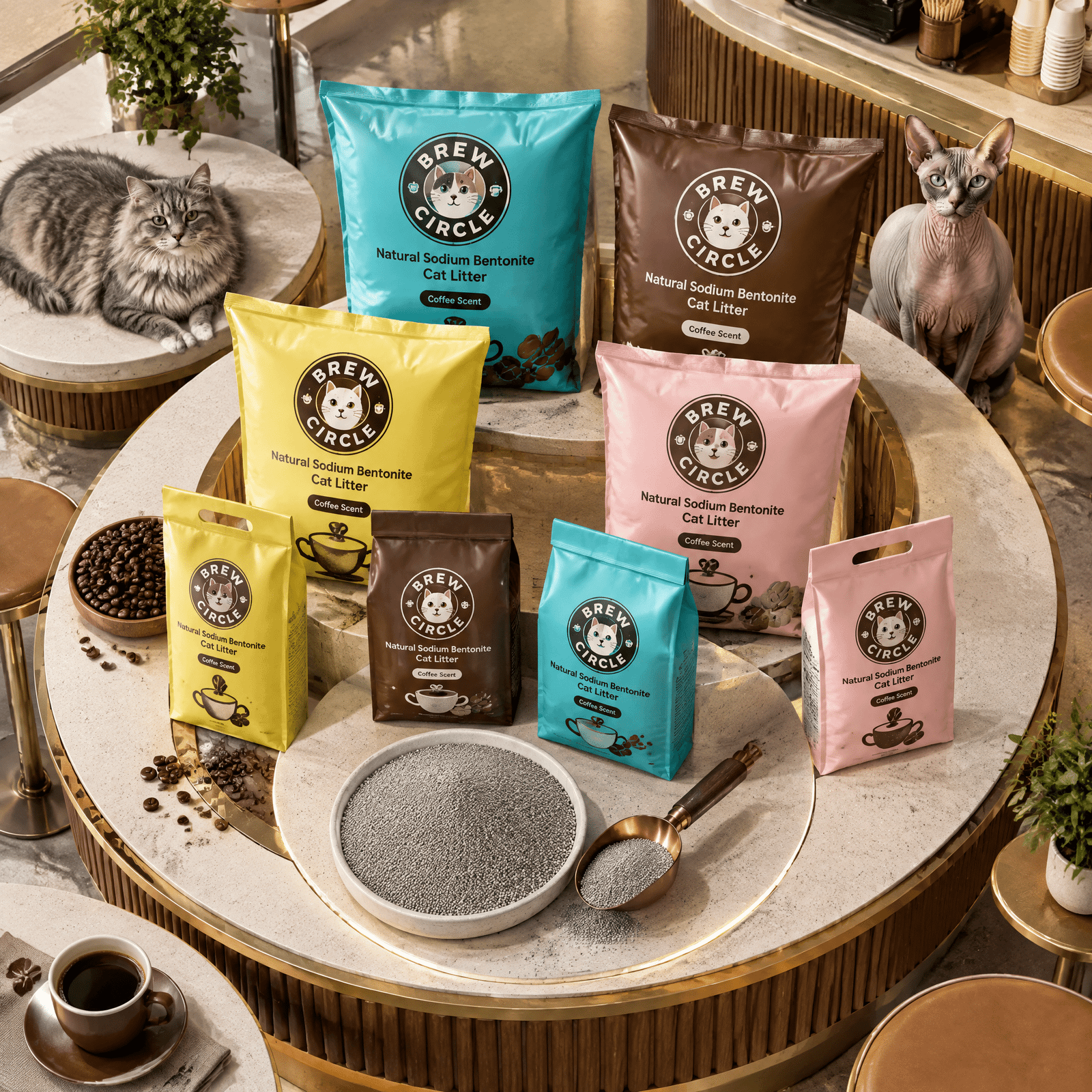
Stand-up pouches with zipper: Popular for tofu and silica gel litter in smaller sizes. They stand on a shelf, reseal after each use, and give you a large front panel for branding.
Gusseted flat-bottom bags: A strong choice for mid-size bentonite and tofu packs. The square base keeps the bag upright and gives you printable side panels.
Woven polypropylene bags: Durable and cost-effective for heavy bentonite packs of 10 kg and above. They resist tearing during handling and long-distance shipping.
Boxes, buckets and tubs: Used for premium lines or bulk formats. They protect the product well and are easy to carry, but they take up more container space and cost more per unit.
Choosing Pack Sizes
Pack size shapes both retail positioning and logistics. Common options run from small 2–3 L trial packs up to large 10–20 L or 10+ kg value packs. When choosing, think about:
- Where you’ll sell: e-commerce often favors lighter, compact packs that ship cheaply, while retail and wholesale buyers may want larger value formats.
- Whether you label by volume (liters) or weight (kg), which can depend on litter type and your target market’s conventions.
- How each size fits on a pallet and in a container, since this directly affects your landed cost.
Printing and Branding Options
Most manufacturers offer two main approaches. Gravure printing delivers sharp, vibrant results and works best for larger runs, though it usually requires printing cylinders and a higher packaging MOQ. Digital printing suits smaller runs and test launches, with lower setup cost but a higher price per bag.
Finishing touches such as matte or gloss surfaces, clear product windows, carry handles and easy-pour spouts all help your brand stand out.
Practical Details That Matter
- Moisture barrier: Litter absorbs humidity, so the bag’s material layers should protect it during long sea freight.
- Labeling requirements: Ingredients, net content, usage instructions and importer details vary by market, so check local rules early.
- Artwork lead time: Allow time for design files, proofs and printing plate production before your first production run.
At Acmic, we support custom private-label packaging across bentonite, silica gel and tofu litter, from bag selection to printed artwork. Contact us to discuss packaging samples and options for your brand.