

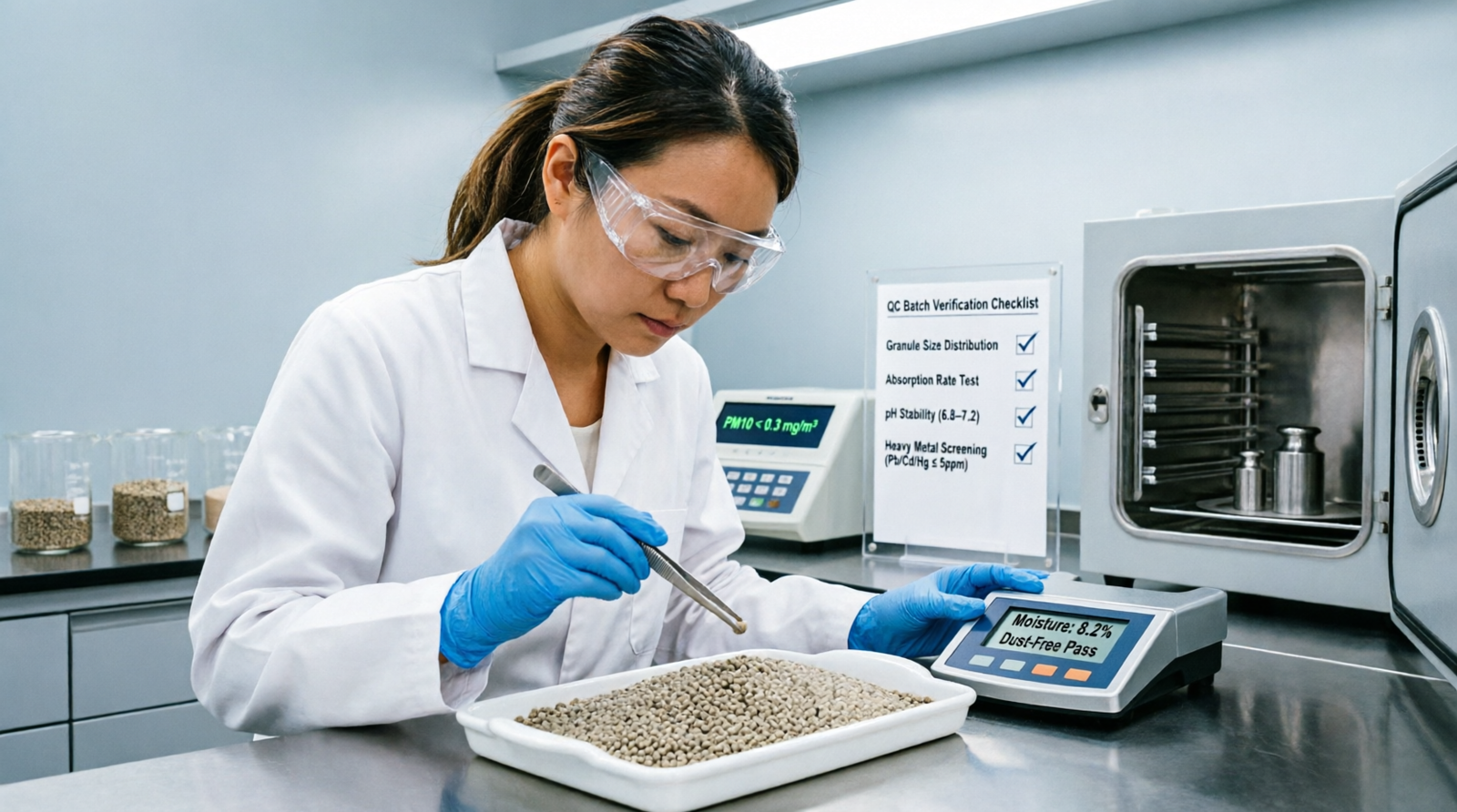

When a pet brand puts its name on a bag of cat litter, it is also putting its reputation on every batch inside that bag. One shipment with weak clumping or excess dust can undo months of good reviews. That’s why batch testing and traceability sit at the center of how we run production at our Qingdao facility.
Here’s what happens between raw material and sealed pallet.
1. Incoming Raw Material Checks
Quality starts before anything reaches the production line. Each delivery of bentonite clay, silica gel, or plant fiber is sampled on arrival and checked for moisture content, particle consistency, and visible contamination. Material that doesn’t match the approved spec is set aside instead of being blended in and “averaged out.”
2. In-Process Monitoring
During production, operators pull samples at set intervals to check granule size distribution with standard sieves, plus moisture after drying. Catching drift mid-run is far cheaper than discovering it after 20 tonnes are already packed.
3. Finished-Batch Performance Tests
Before a batch is released, we test the qualities your customers actually notice:
- Clump strength: does a wetted clump hold together when lifted?
- Absorption: how much liquid the litter takes up by weight
- Dust level: a visual and handling check against the approved reference sample
- Fragrance consistency: scent intensit compared with the golden sample
- Net weight: random bag checks against the labeled weight
Every result is compared with the approved golden sample from your original sampling round, so “passed” means the same thing on your tenth order as on your first.
4. Batch Coding and Retained Samples
Each production run gets a batch code printed on the bag and carton. We keep retained samples from each batch in storage. If a retailer or end customer ever reports a problem, we can pull the exact batch, re-test it, and trace it back to the raw material lot and production date.
5. Pre-Shipment Inspection
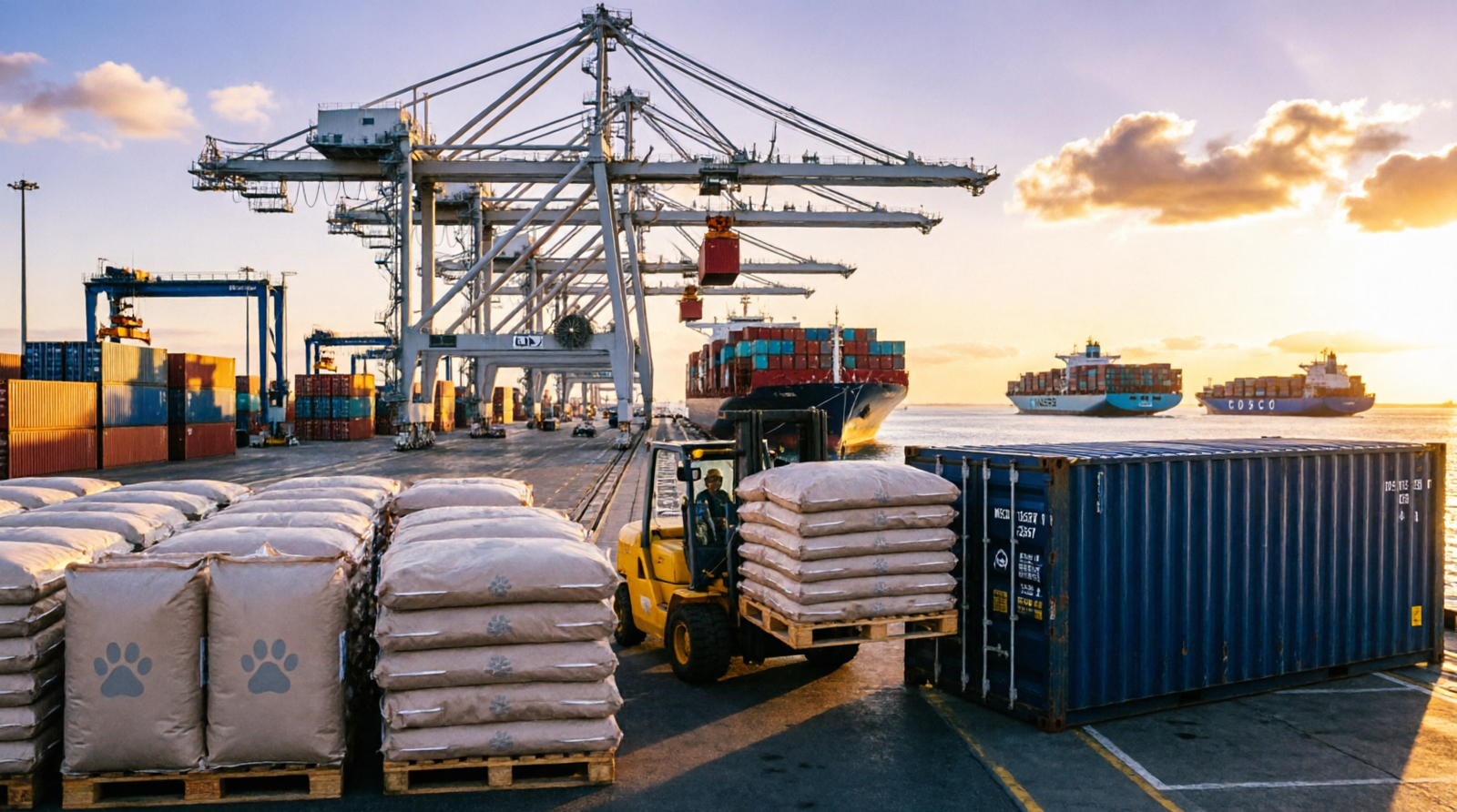
Before loading, we check packaging integrity, seal quality, carton labeling, and pallet stacking. Brands are welcome to send a third-party inspector for a pre-shipment check as well. A good manufacturer should welcome it, not resist it.
Why This Matters for Your Brand
For a private-label buyer, strong QC means fewer customer complaints, easier retailer onboarding, and a clear paper trail if a question ever comes up. When you evaluate any cat litter supplier, ask them to walk you through their batch process step by step. Their answer tells you a lot about what you’ll receive.