
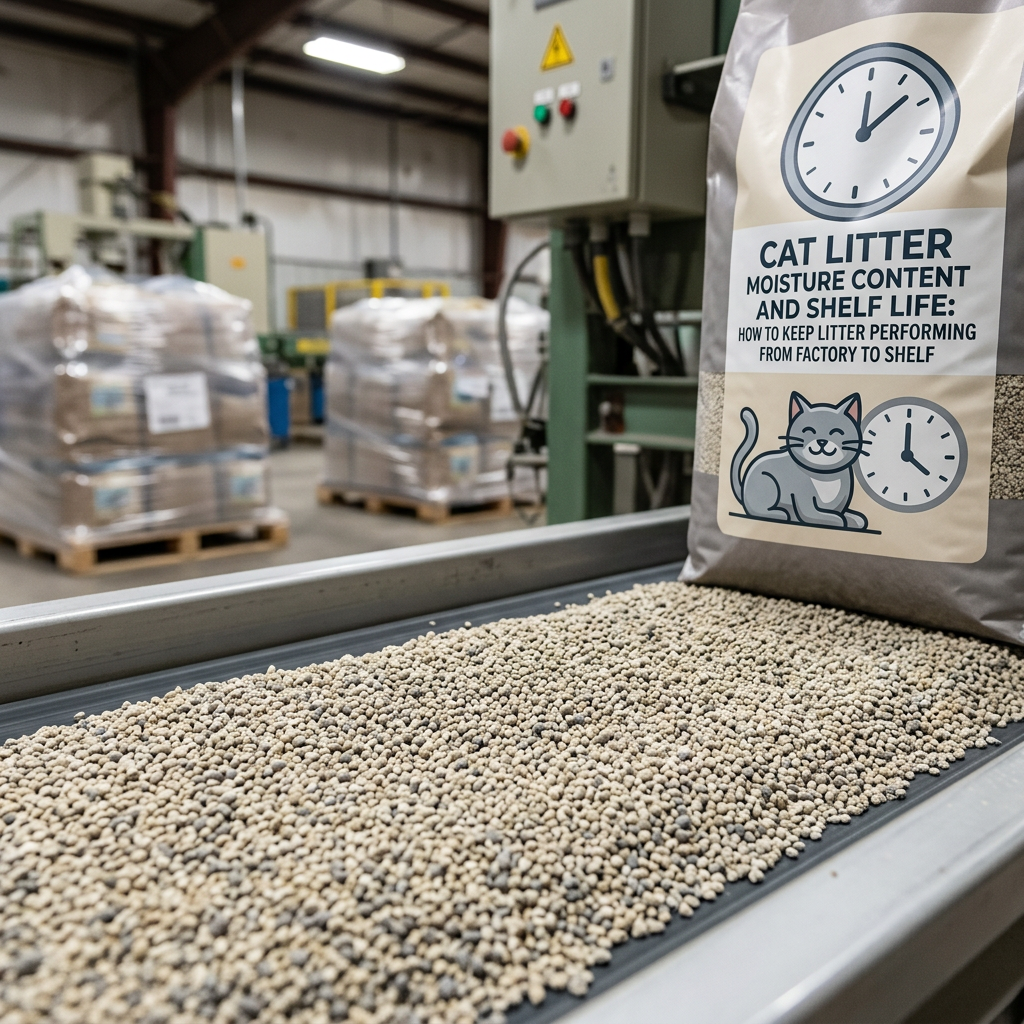



Cat litter is built to absorb moisture. That’s exactly why it needs protecting from moisture before it reaches the litter box. For private-label brands, moisture content and shelf life are easy to overlook, yet they decide whether the product a customer opens performs like the sample you approved.
Why Moisture Content Matters
Every litter leaves the factory with a small amount of residual moisture. If that level is too high, or the litter picks up humidity in storage, performance drops:
- Bentonite litter can lose clumping strength and start to cake inside the bag.
- Tofu litter is plant-based, so excess moisture can lead to mold risk, softened pellets and off odors.
- Silica gel litter gradually uses up its absorption capacity if it’s exposed to humid air, which leaves less for the litter box.
That’s why a good product specification sets a maximum moisture content for each formula, and why the factory should check it on every batch.
How Manufacturers Control It
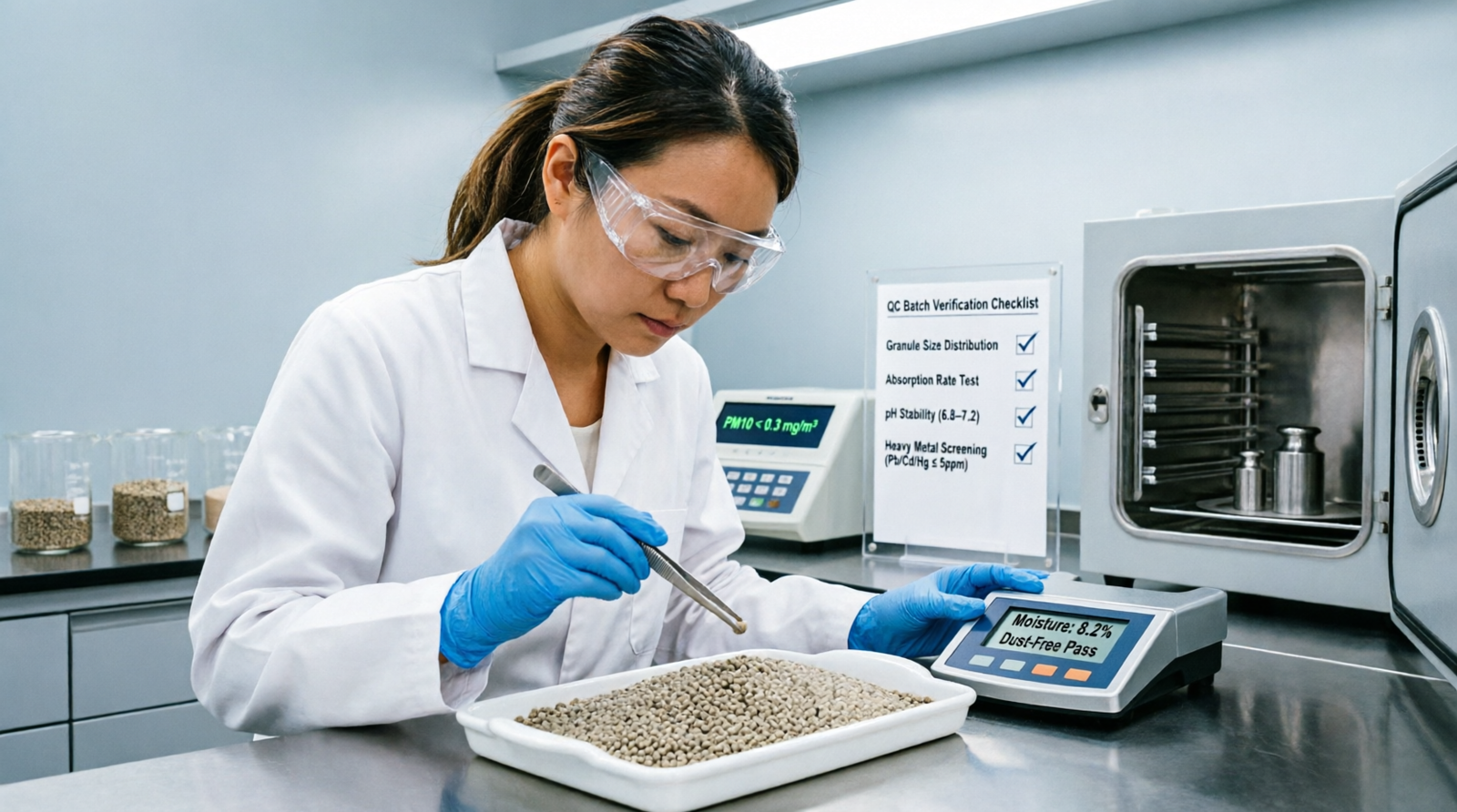
At the factory, moisture control comes down to drying, testing and fast packing. Tofu and bentonite are dried to a target range after forming. Samples from each batch are then tested before packing, and finished litter goes into bags quickly so it doesn’t sit exposed to air. Recording moisture results alongside each batch number also gives you traceability if a complaint comes in later.
Packaging Is Your First Line of Defense
The bag does more than carry your brand. Moisture-barrier packaging, such as laminated films or bags with a PE inner layer, slows humidity from getting in. Heat-sealed closures, resealable zippers for the end user, and the right pallet wrapping for export all help. Long sea freight through humid climates is where weak packaging tends to fail, so ask your supplier how the pack performs over a full shipping route.
Shelf Life and Storage Tips
Shelf life varies by litter type, packaging and climate, so confirm it with your manufacturer instead of assuming. To protect stock once it lands:
- Store in a cool, dry, ventilated warehouse, off the floor on pallets.
- Keep bags away from walls, doors and direct sunlight.
- Rotate stock on a first-in, first-out basis.
- Print a clear production date or best-before date on each bag.
Build It Into Your Spec
When you develop a private-label line, ask your OEM partner for the moisture limits, testing method, recommended shelf life and storage guidance for each product. At Acmic, we produce bentonite, silica gel and tofu cat litter for OEM and ODM partners and can match formula and packaging to your market’s climate. Contact us to request samples.