




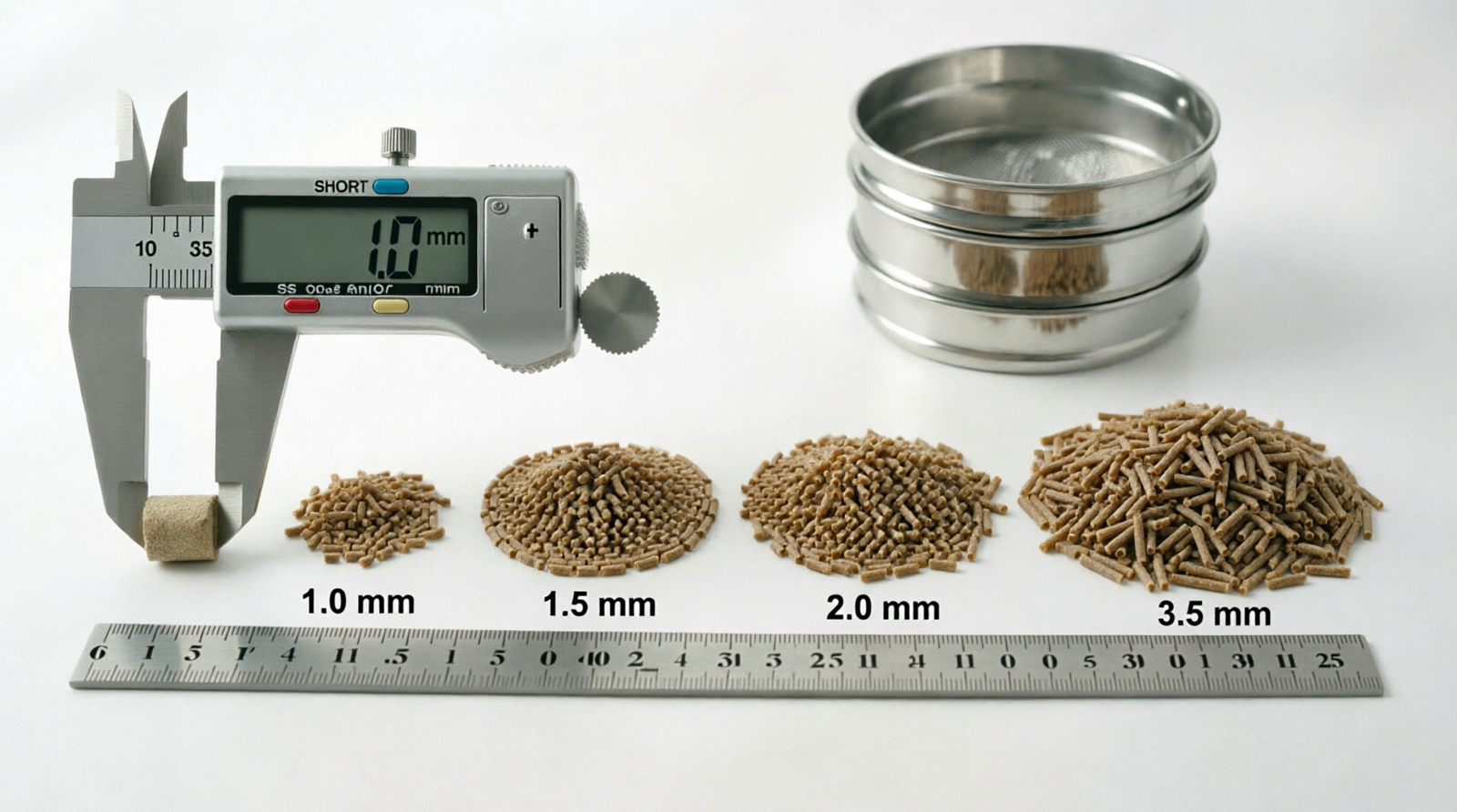

When brands evaluate a cat litter formula, most conversations start with material — bentonite, silica, or tofu. But one factor that gets far less attention, and has an outsized effect on the end customer’s experience, is **granule size**. At Acmic, particle sizing is one of the first things we tune during formulation, because it drives three things buyers care about most: **tracking, dust, and paw comfort**.
## What “Granule Size” Actually Means
Granule size refers to the **average particle diameter** of the litter after processing — typically measured in millimeters and controlled through **screening and sieving steps** during manufacturing. A single formula can be produced at multiple particle sizes (fine, medium, coarse) without changing the base material, which is why granule size is really a **manufacturing spec**, not a raw-material property.
## Tracking: The #1 Customer Complaint
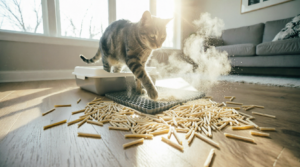
**Tracking** — litter granules sticking to a cat’s paws and scattering around the house — is one of the most common negative-review triggers for litter brands. Smaller, lighter granules track more because they cling to fur and paw pads more easily. **Larger, rounder granules** track less but can feel coarse underfoot, which some cats reject. Getting this balance right is a formulation decision, not a marketing one — “low-tracking” claims should be backed by an actual particle size spec.
## Dust: Sizing and Screening Together
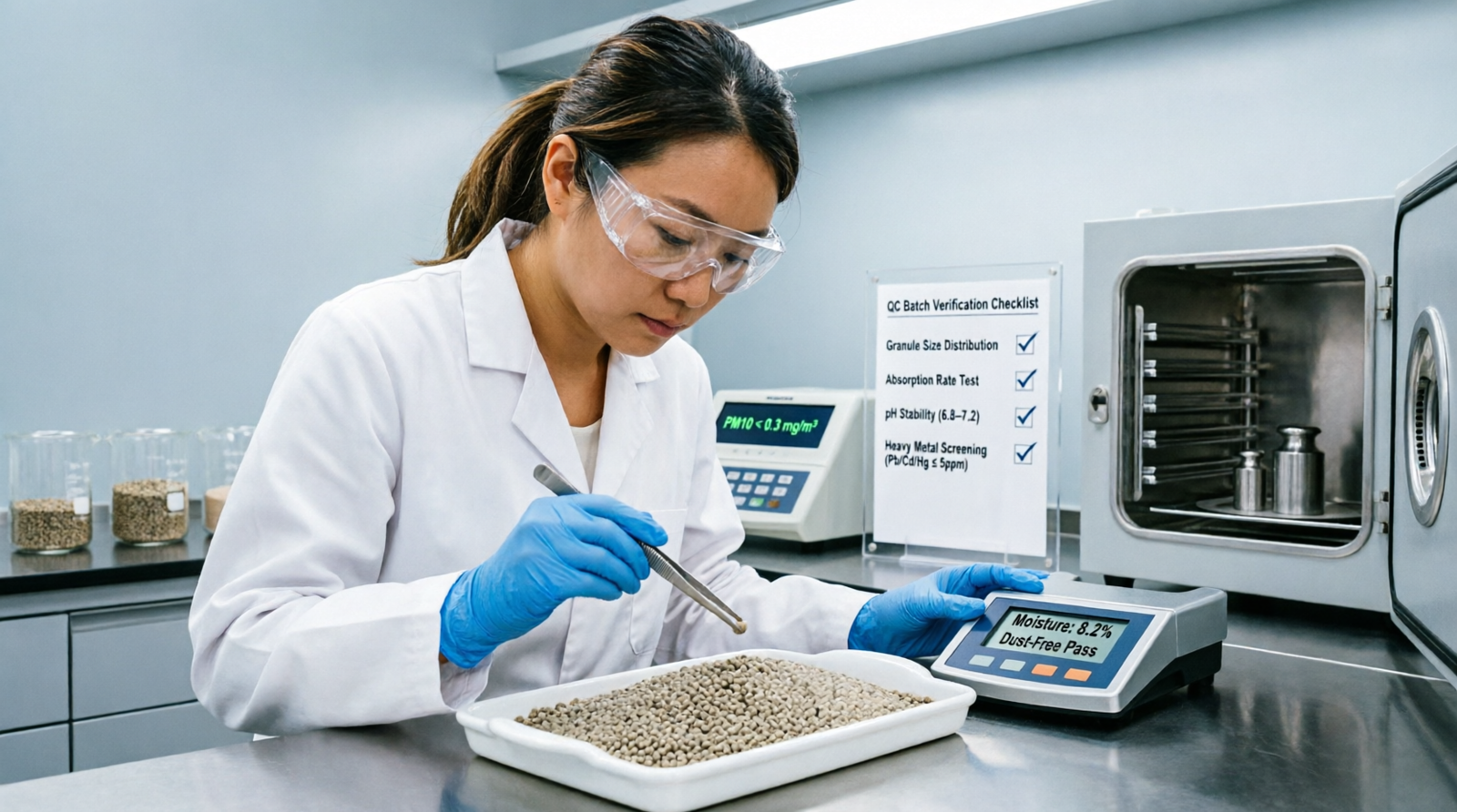
**Dust generation** is closely tied to granule size because fine particulate is a byproduct of grinding and handling raw material. Tighter particle size distribution — achieved through **multi-stage screening** that removes undersized fines before packaging — is what separates a genuinely low-dust product from one that’s just labeled that way. This is also a respiratory health consideration for both cats and owners, making it a compliance-relevant spec in some markets.
## Comfort and Cat Preference
Cats are famously particular about litter texture underfoot, and **granule size directly affects paw sensation**. Very fine litters feel soft but track heavily; very coarse litters track less but can cause some cats to avoid the box entirely — a real problem for retention in premium and health-focused product lines. Testing granule size against actual **cat acceptance behavior**, not just lab metrics, is part of a properly developed ODM formula.
## What Buyers Should Ask For
When sourcing private-label litter, ask your manufacturer for the **particle size distribution report**, not just a sample bag. A reputable OEM/ODM partner should be able to show you sizing data and explain the tracking/dust/comfort tradeoffs for your specific target customer — mass market, premium, or multi-cat households.
—
## Suggested images
– Macro/close-up shot comparing fine, medium, and coarse litter granules side by side
– Factory shot of a sieving/screening machine in the production line
– Cat paw stepping into litter (to illustrate comfort/texture angle)
– Infographic-style callout: “Fine vs Coarse Granules — Tracking, Dust, Comfort” comparison chart
– Lab technician measuring particle size distribution with sieve trays
## Tags
Cat Litter Granule Size, Low Tracking Cat Litter, Cat Litter Dust Control, Cat Litter Particle Size, Cat Litter Manufacturing Process, Private Label Cat Litter, OEM Cat Litter Manufacturer, ODM Pet Product Development, Cat Litter Formulation, Cat Paw Comfort Litter, Low Dust Cat Litter, Cat Litter Screening Process, Pet Product Sourcing, Cat Litter Quality Control, Bulk Cat Litter Manufacturer