



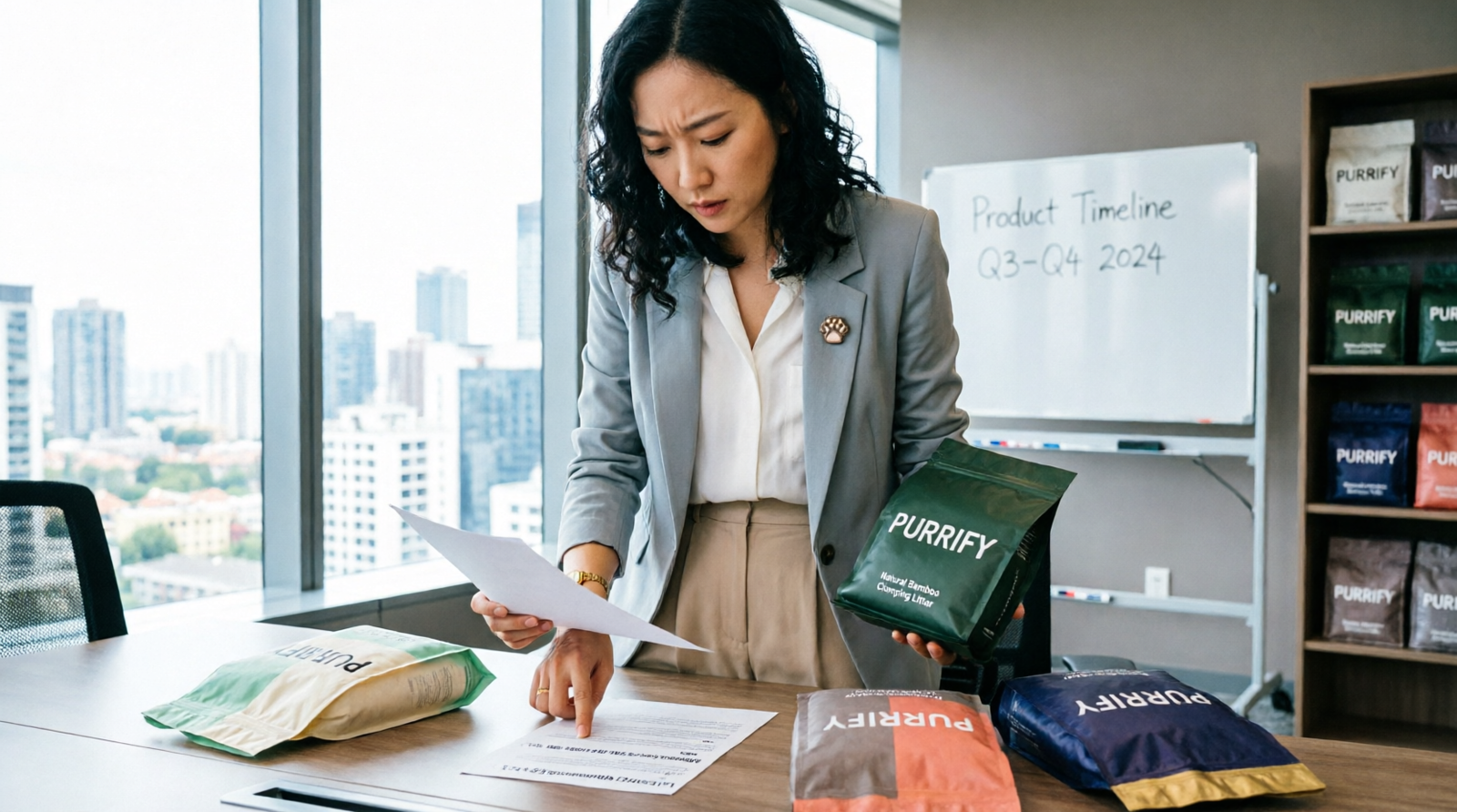

If you’re launching a private-label cat litter line, two numbers will shape your entire go-to-market plan before a single bag ships: **minimum order quantity (MOQ)** and **lead time**. Both vary far more than most first-time buyers expect, and misunderstanding either one is one of the most common reasons early launches stall.
## Why MOQs Vary So Much
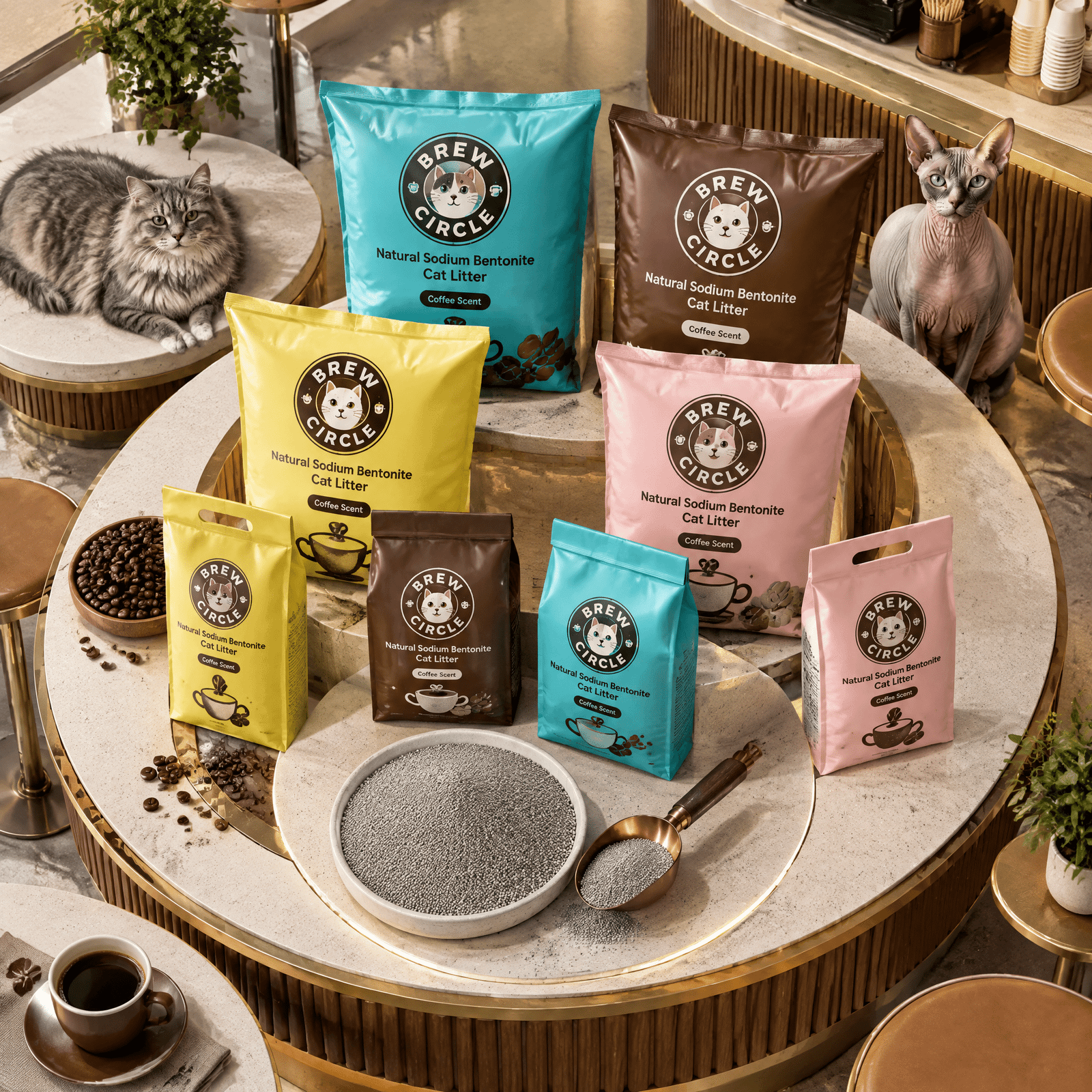
Cat litter MOQs are driven by **raw material batch sizes**, not arbitrary factory policy. Bentonite clay is typically processed and dried in large batches, so a factory’s minimum often reflects the smallest efficient production run — commonly **one full container load** for clay-based litters. **Tofu and plant-based litters** can sometimes support smaller MOQs because production lines are more flexible, but formulation complexity (added scents, multi-cat formulas, dust-free coatings) tends to push minimums back up. Packaging customization matters too — a fully custom printed bag with your own branding usually carries a higher MOQ than a factory’s standard bag with a private-label sticker.
## What Actually Drives Lead Time
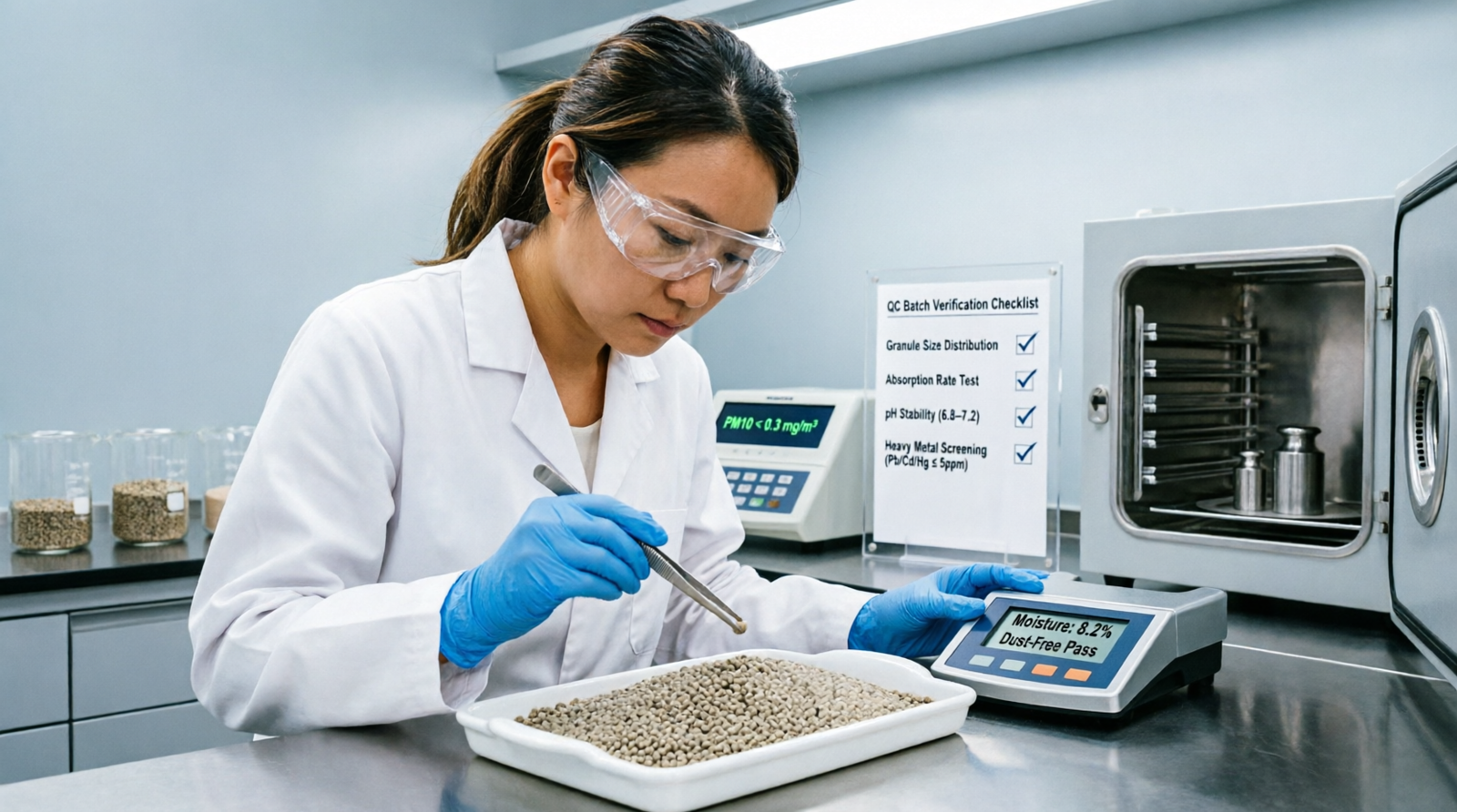
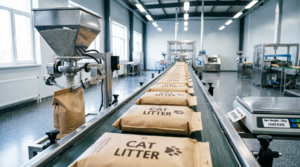
**Lead time** is rarely just “how long it takes to make the product.” It’s the sum of several stages: **raw material sourcing and testing**, **production scheduling** (your order competes with other clients’ slots), **quality control checks**, and **export documentation**. A realistic range for a first order is **30–60 days** from deposit to shipment-ready, though this compresses significantly on repeat orders once a factory already has your formula and packaging specs on file.
## Questions to Ask Before You Commit
New brands should ask a manufacturer directly: What is the MOQ **per SKU**, not just per order? Does lead time include **third-party lab testing**, if requested? What happens to lead time if you want a **formulation tweak** mid-production run? Vague or evasive answers to these questions are a bigger red flag than a high MOQ number itself — a transparent manufacturer will walk you through exactly where the weeks go.
## The Practical Takeaway
**Smaller first orders are possible**, but they usually mean either a higher per-unit cost or a compromise on custom packaging. The manufacturers worth working with will tell you this upfront instead of quoting an unrealistic minimum just to win the deal. Planning your launch inventory and cash flow around **realistic MOQ and lead time numbers** — not best-case marketing claims — is what separates a smooth first production run from a stressful one.
—