
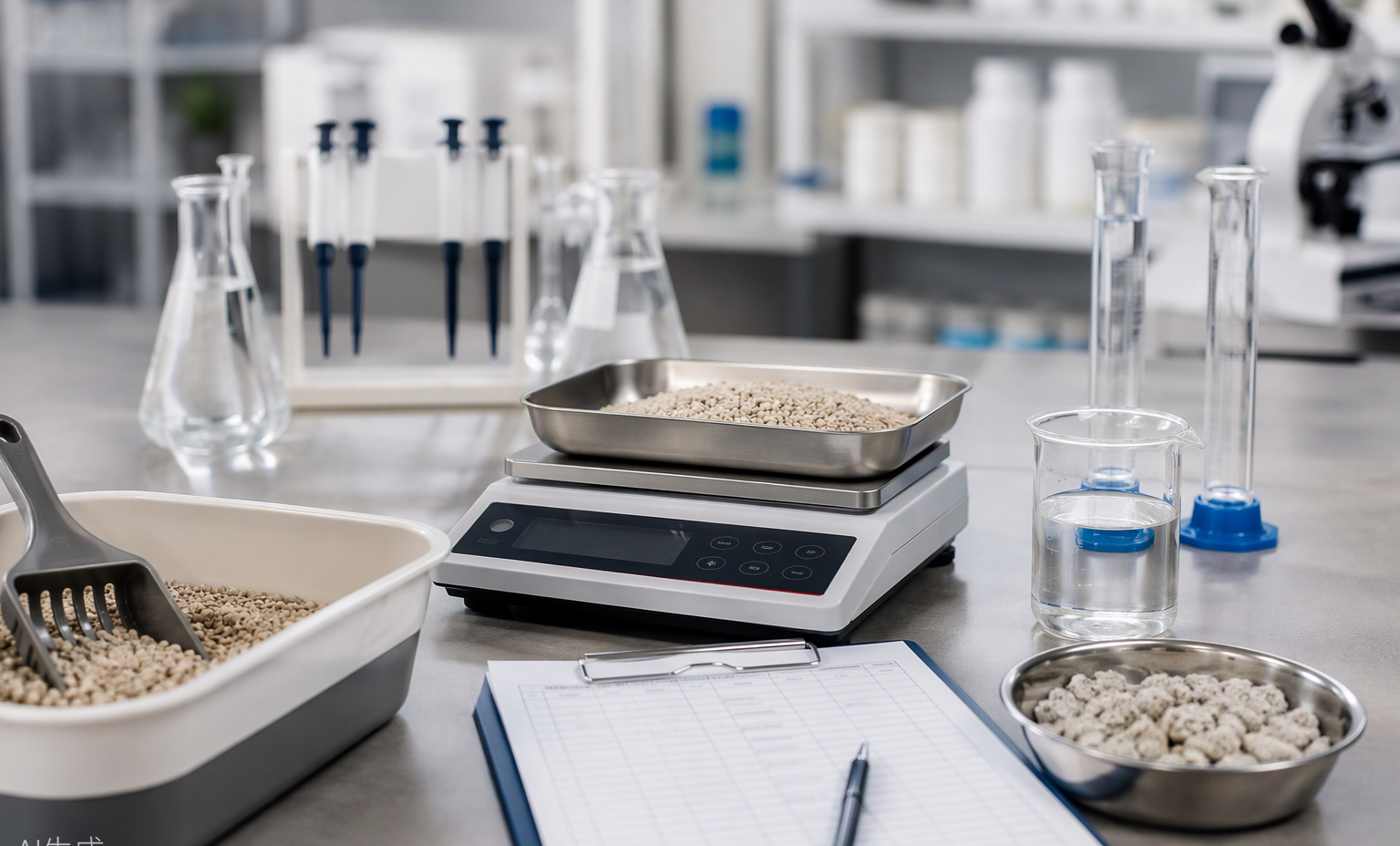


“Flushable” is one of the strongest convenience claims on a cat litter bag — and one of the easiest to get wrong. For private-label brands, the word sits at the intersection of product design, plumbing reality and marketing compliance. Before you put it on your packaging, it’s worth understanding what the claim actually requires from the product.
Which Litters Can Carry a Flushable Claim
Not every “natural” litter breaks down in water. In practice:
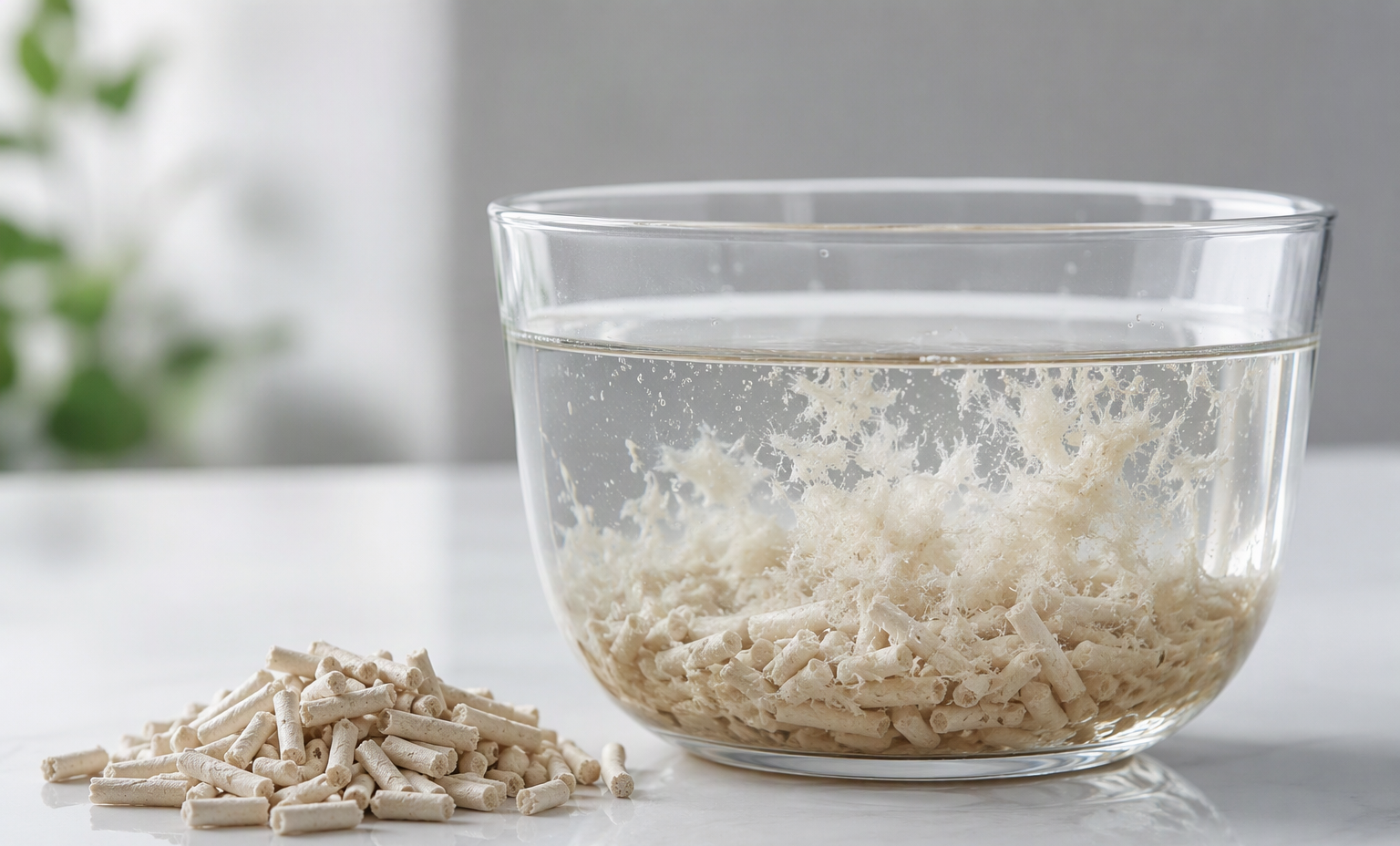
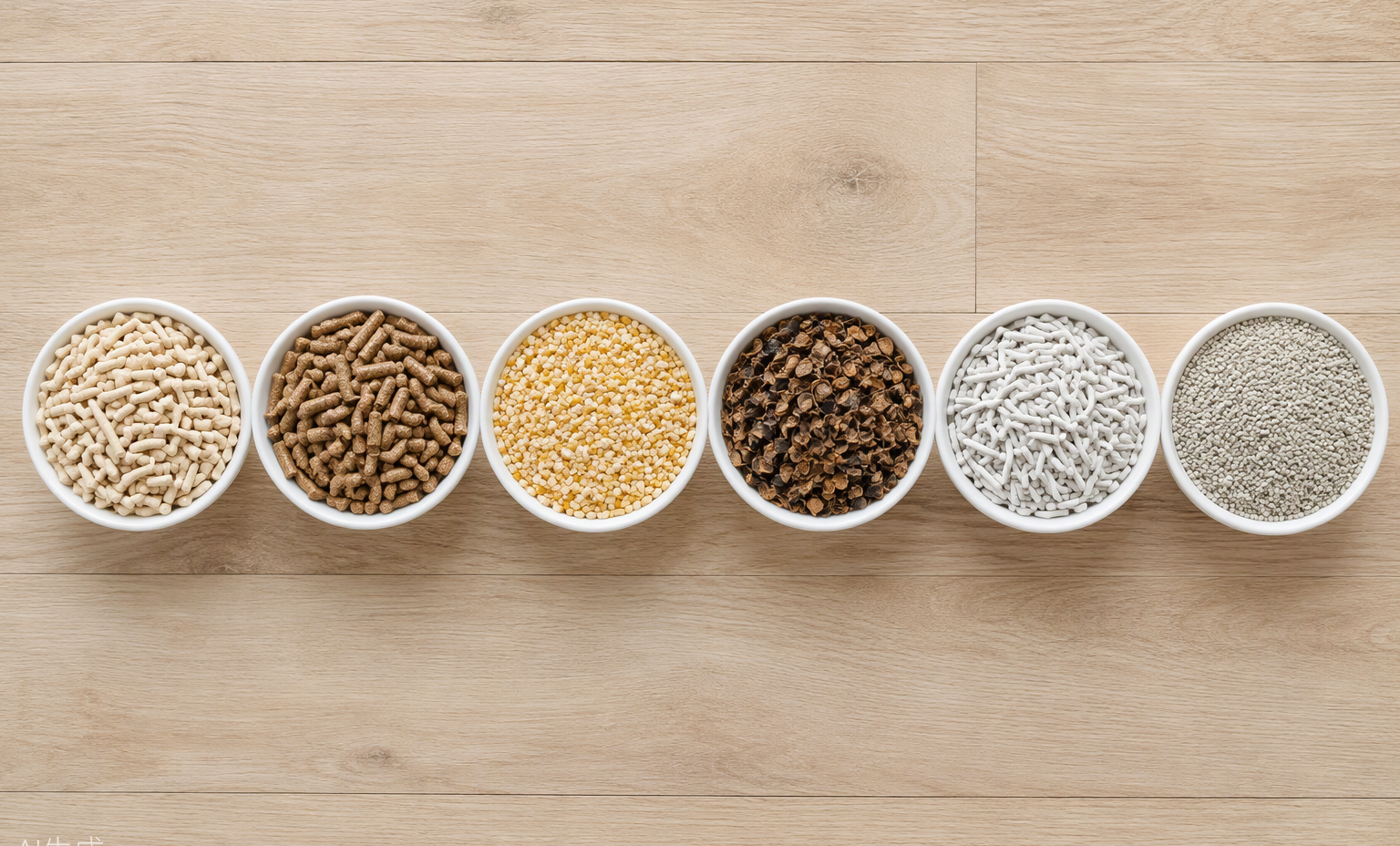
- Tofu litter (made from soybean residue) is the most common flushable-positioned product. Its pellets soften and disperse into fibers when soaked.
- Other plant-based litters — corn, wheat, paper — are often marketed similarly, though performance varies by formula and pellet structure.
- Bentonite and silica gel litters are never flushable. Bentonite is designed to swell and clump; silica gel absorbs but does not disperse. Both can block pipes.
If a supplier offers you a “flushable bentonite blend,” treat that as a red flag and ask for test data.
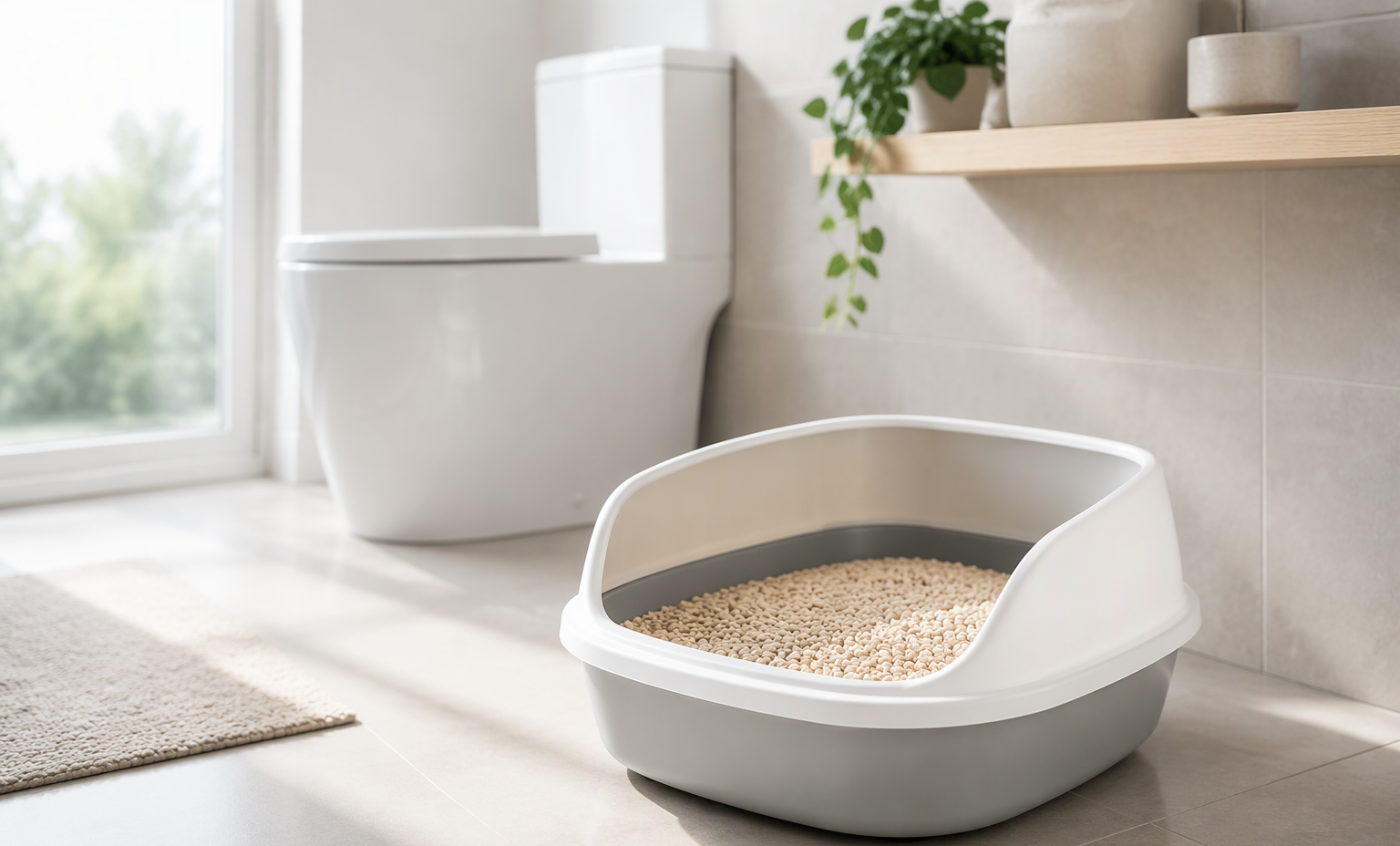
What “Flushable” Should Mean Technically
The claim should be about dispersibility in water, not just biodegradability. A pellet that eventually rots in a landfill tells you nothing about what it does in a pipe. What matters is how quickly and how completely the pellet breaks apart into fine particles under soaking and gentle agitation. The flushability guidelines developed for disposable wipes are a useful reference framework here: they test disintegration under realistic flow conditions, not just whether a material is “plant-based.”
Pellet diameter and density matter too. Thicker, harder pellets survive longer in water, which is why the same formula can behave differently across pellet sizes.
The Plumbing and Regulatory Caveats
Even a genuinely water-dispersible litter carries disclaimers your brand needs to handle:
- Old plumbing and septic systems may not cope with any added solids, however dispersible.
- Municipal rules vary. Some water authorities advise against flushing any cat litter, and some coastal regions — California is a well-known example — push “do not flush” disposal guidance on cat litter packaging over concerns about cat waste pathogens reaching marine life.
- Green-claims scrutiny is rising. Regulators in the EU and US are tightening rules on vague environmental and disposal claims. “Flushable” on a bag that clogs a customer’s pipes is a complaint and refund problem; on a bag that shouldn’t carry the claim in that market, it can be a compliance problem.
How to Spec It With Your OEM Partner
Treat “flushable” as a testable specification, not a marketing adjective:
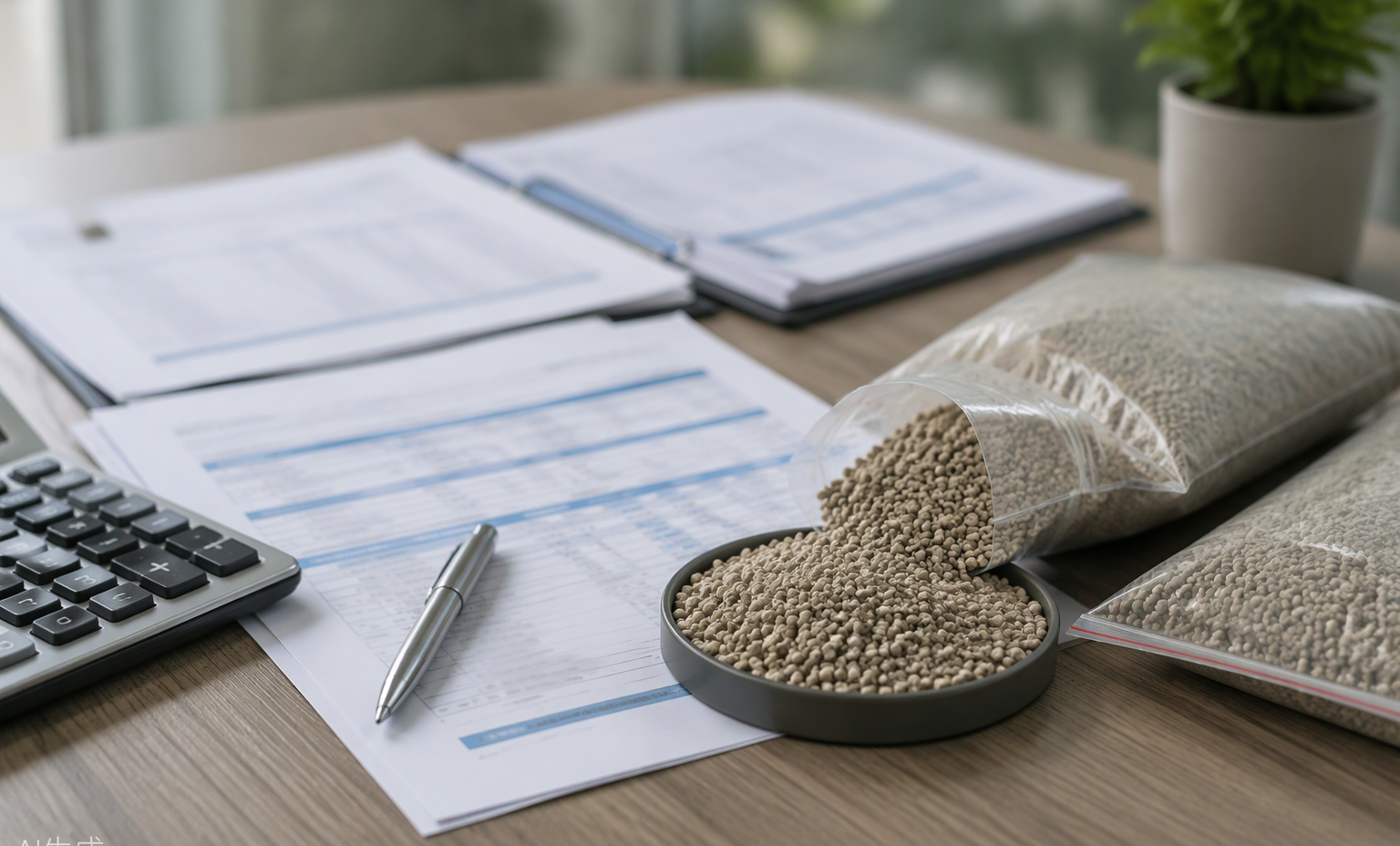
- Ask for disintegration or dispersibility test data — soak time to breakdown, ideally checked per batch, and across each pellet size you plan to sell.
- Agree on exact claim wording per market: “flushable,” “water-dispersible” and “biodegradable” are not interchangeable, and each invites different scrutiny.
- Put disposal instructions on the packaging: small amounts, one or two clumps at a time, no flushing into septic or old systems, and local-rule disclaimers where required.
- Run your own soak test on pre-production samples before approving artwork that carries the claim.
Build the Claim on Data, Not Hope
A flushable line can be a real differentiator for urban, apartment-dwelling customers — but only when the product, the testing and the packaging copy all line up. At Acmic, we produce tofu, bentonite and silica cat litter for OEM and ODM partners and can share dispersibility test results for our tofu formulas before you commit to claim wording. Contact us to request samples and test data.