



Clumping vs Non-Clumping Cat Litter: What Should Your Range Stock?

Recent posts

Flushable Cat Litter: What the Claim Really Means for Private-Label Brands

Flushable Cat Litter: What the Claim Really Means for Private-Label Brands

The Rise of Private Label in Pet Retail: Why Store Brands Are Moving Into Cat Litter

The Rise of Private Label in Pet Retail: Why Store Brands Are Moving Into Cat Litter

Beyond Bentonite and Tofu: A Buyer's Guide to Alternative Cat Litter Materials

Beyond Bentonite and Tofu: A Buyer’s Guide to Alternative Cat Litter Materials

Comparing Cat Litter Quotes: Why the Cheapest Price Per Ton Can Cost You More

Comparing Cat Litter Quotes: Why the Cheapest Price Per Ton Can Cost You More

Inside the QC Lab: The Standard Tests Every Cat Litter Batch Should Pass

Inside the QC Lab: The Standard Tests Every Cat Litter Batch Should Pass

Why Cats Are Winning the Urban Pet Race — and What It Means for Litter Demand

Why Cats Are Winning the Urban Pet Race — and What It Means for Litter Demand

social share

Send Message

Clumping vs Non-Clumping Cat Litter: What Should Your Range Stock?

Clumping vs Non-Clumping Cat Litter: What Should Your Range Stock?

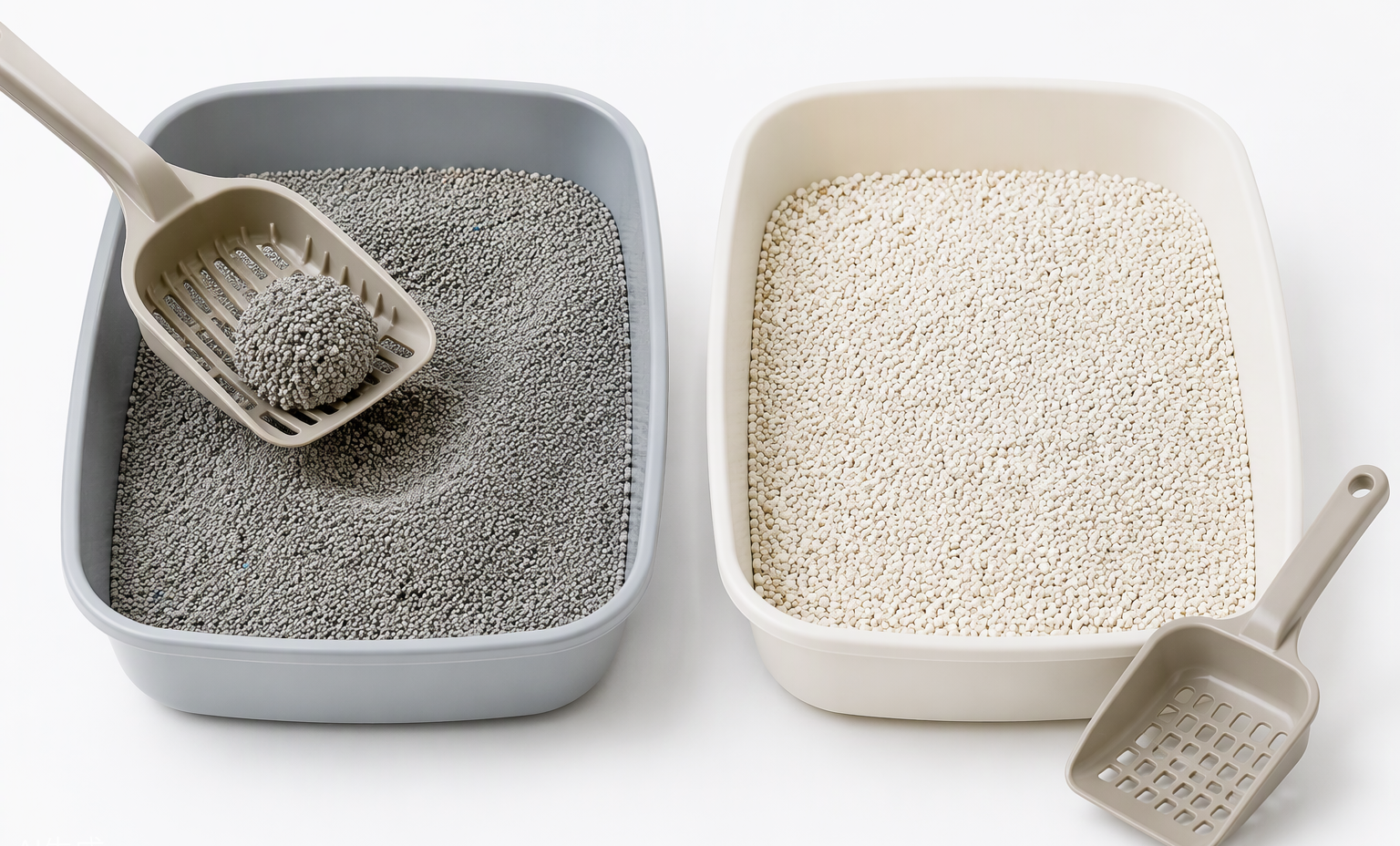
It’s the most basic split in the category, and it still shapes purchasing decisions: clumping or non-clumping. For brands and distributors, the question isn’t which is “better” — it’s which segments you’re serving and how each type earns its shelf space. Here’s the buyer’s-eye view.

How Each Type Works

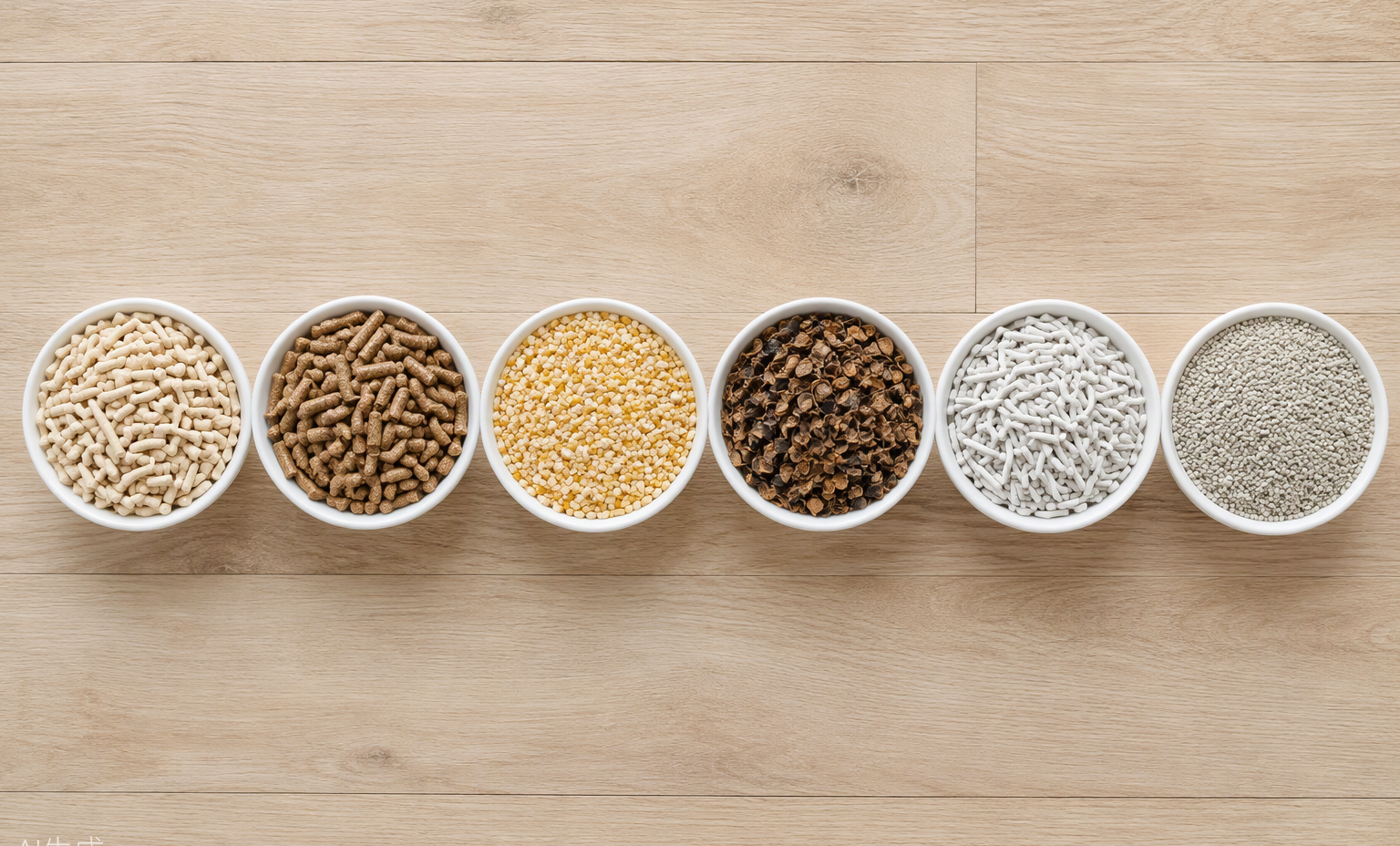
Clumping litter — usually sodium bentonite, but also tofu and mixed formulas — forms solid clumps around moisture. The owner scoops out the clumps and tops up the tray; the bulk of the litter stays in use for weeks. Non-clumping litter — calcium bentonite, wood pellets, paper, and (in its own way) silica gel — absorbs moisture without forming scoopable clumps, so the whole tray gets changed on a schedule.

The Case for Clumping

Clumping dominates the premium and mid segments for good reasons: daily spot-cleaning keeps the tray fresher between full changes, odor control is easier because soiled litter leaves the box immediately, and the cost per day of use is often lower despite a higher bag price, since less product is discarded. It’s also where consumer expectations are heading — in most developed markets, clumping is the default assumption.
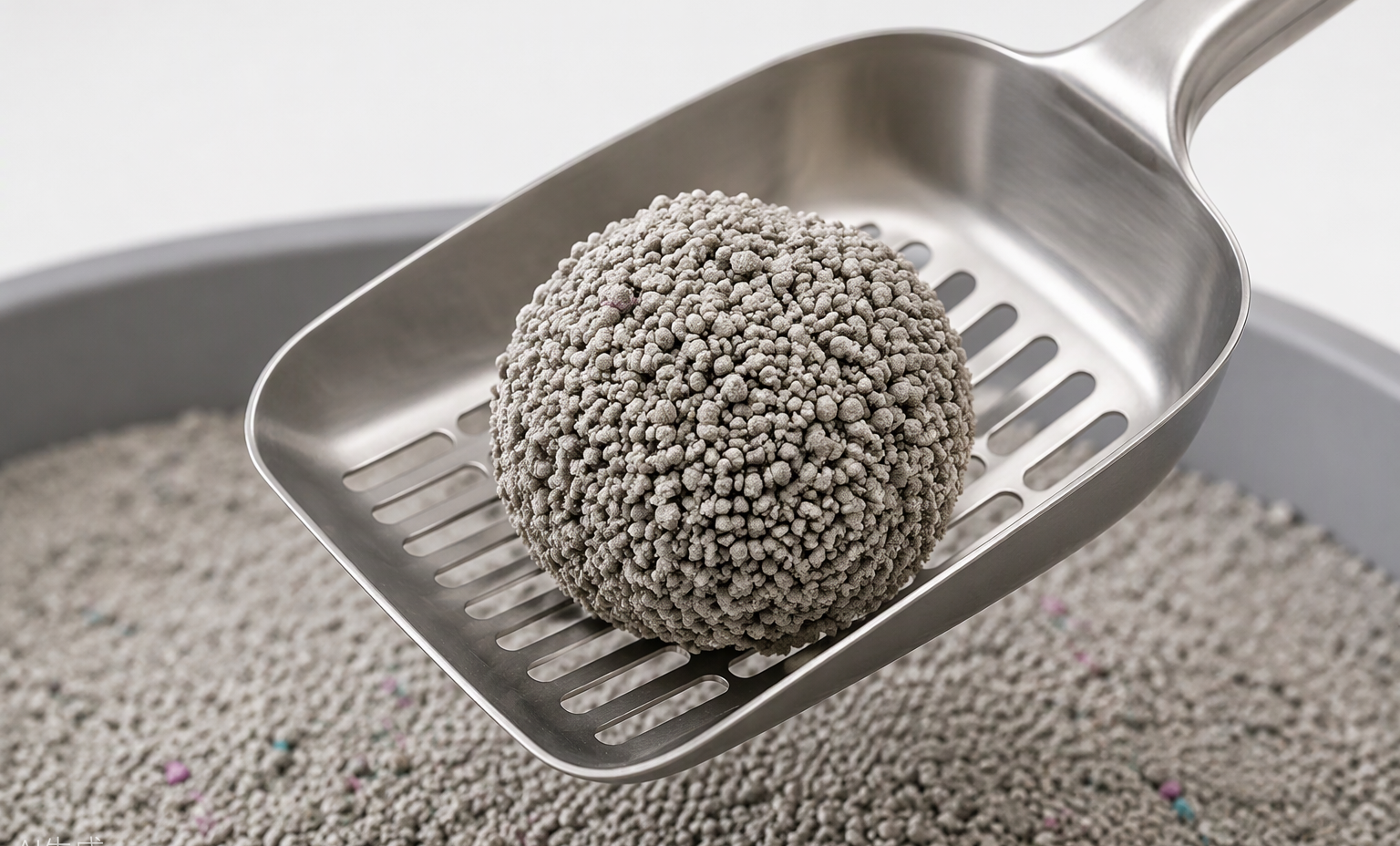
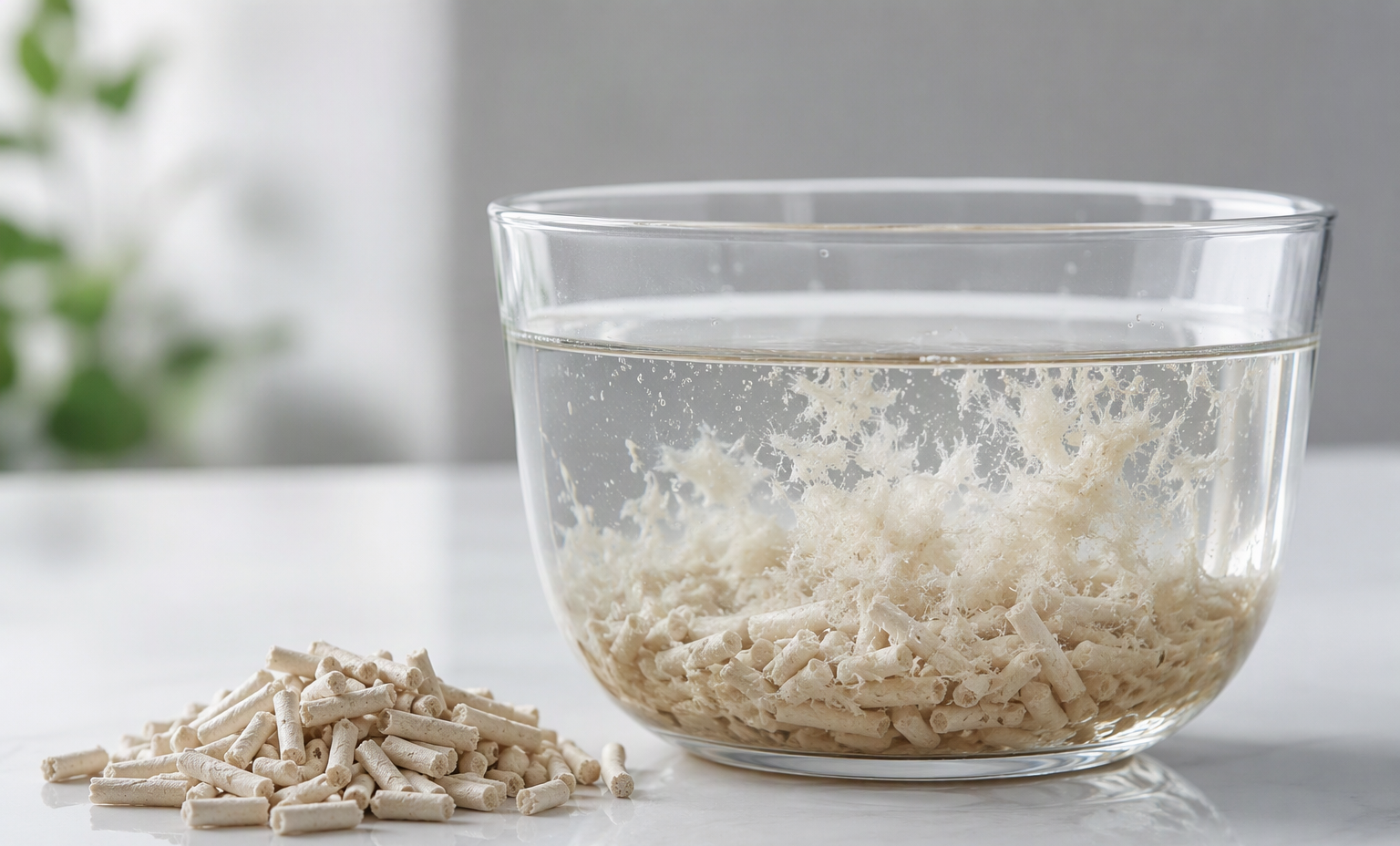
A well-formed clump of clumping litter lifted cleanly in a scoop

The Case for Non-Clumping

Non-clumping still owns real territory. It’s the entry price point in price-sensitive markets, it’s simple to manufacture and explain, and specific materials serve specific niches: wood pellets pair with sifting trays, paper suits post-surgery cats, and silica gel — technically non-clumping — wins on absorption capacity and low maintenance. In some regions, non-clumping clay remains the traditional mainstream product, and habits change slowly.

What Actually Drives the Choice by Market

Three factors predict which type sells in a given market: consumer habit (what first-time cat owners learn to buy), price sensitivity (clumping costs more per bag but often less per week — whether shoppers see that depends on retail education), and retail channel (discounters lean non-clumping; pet specialty and e-commerce lean clumping and premium). Watch where your market sits on each before committing your range.

A Practical Range Strategy

Most successful private-label ranges mirror the market’s structure: an entry non-clumping or basic clumping SKU to win on price, and a clumping premium line — stronger clumps, lower dust, added odor control — to capture the trade-up. Skipping either end usually means handing that customer to a competitor.

At Acmic, we manufacture both clumping and non-clumping cat litter — bentonite, tofu, silica and mixed formulas — for OEM and ODM partners building tiered ranges. Contact us for samples across the segments.

Leave a Comment

Your email address will not be published. Required fields are marked *

Related blogs

Flushable Cat Litter: What the Claim Really Means for Private-Label Brands

Flushable Cat Litter: What the Claim Really Means for Private-Label Brands

The Rise of Private Label in Pet Retail: Why Store Brands Are Moving Into Cat Litter

The Rise of Private Label in Pet Retail: Why Store Brands Are Moving Into Cat Litter

Beyond Bentonite and Tofu: A Buyer's Guide to Alternative Cat Litter Materials

Beyond Bentonite and Tofu: A Buyer’s Guide to Alternative Cat Litter Materials

Comparing Cat Litter Quotes: Why the Cheapest Price Per Ton Can Cost You More

Comparing Cat Litter Quotes: Why the Cheapest Price Per Ton Can Cost You More

Inside the QC Lab: The Standard Tests Every Cat Litter Batch Should Pass

Inside the QC Lab: The Standard Tests Every Cat Litter Batch Should Pass

Why Cats Are Winning the Urban Pet Race — and What It Means for Litter Demand

Why Cats Are Winning the Urban Pet Race — and What It Means for Litter Demand

Custom Scents and Additives: How Cat Litter Customization Actually Works in OEM Production

Custom Scents and Additives: How Cat Litter Customization Actually Works in OEM Production

Deposits, Balances and Trade Assurance: How to Pay a Cat Litter Supplier Safely

Deposits, Balances and Trade Assurance: How to Pay a Cat Litter Supplier Safely

Where Cat Litter Raw Materials Come From — and Why Your Supplier's Sourcing Matters

Where Cat Litter Raw Materials Come From — and Why Your Supplier’s Sourcing Matters

How Cat Litter Odor Control Works: Activated Carbon, Baking Soda, Fragrance and More

Scroll to Top

Scan It

Scan It