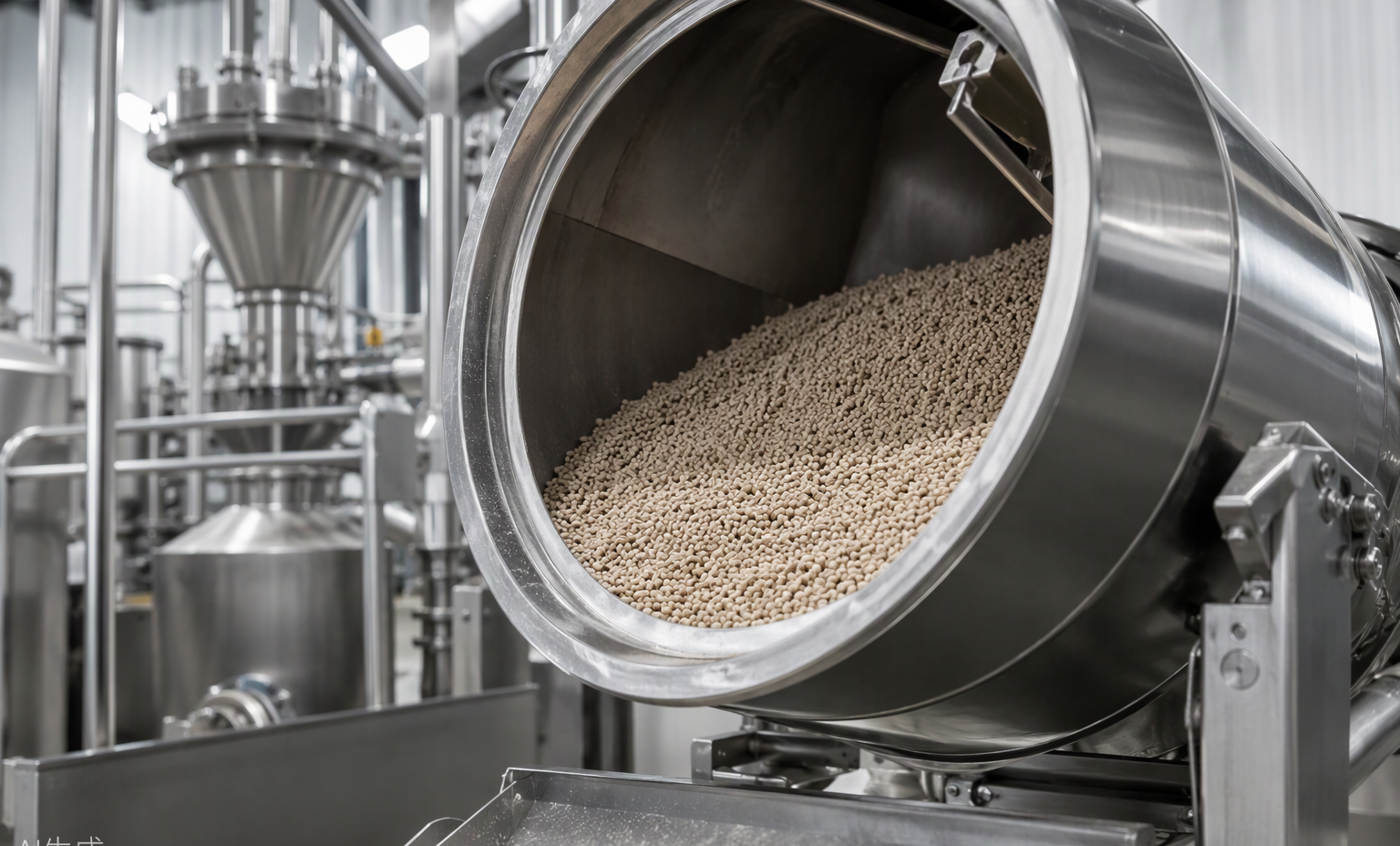

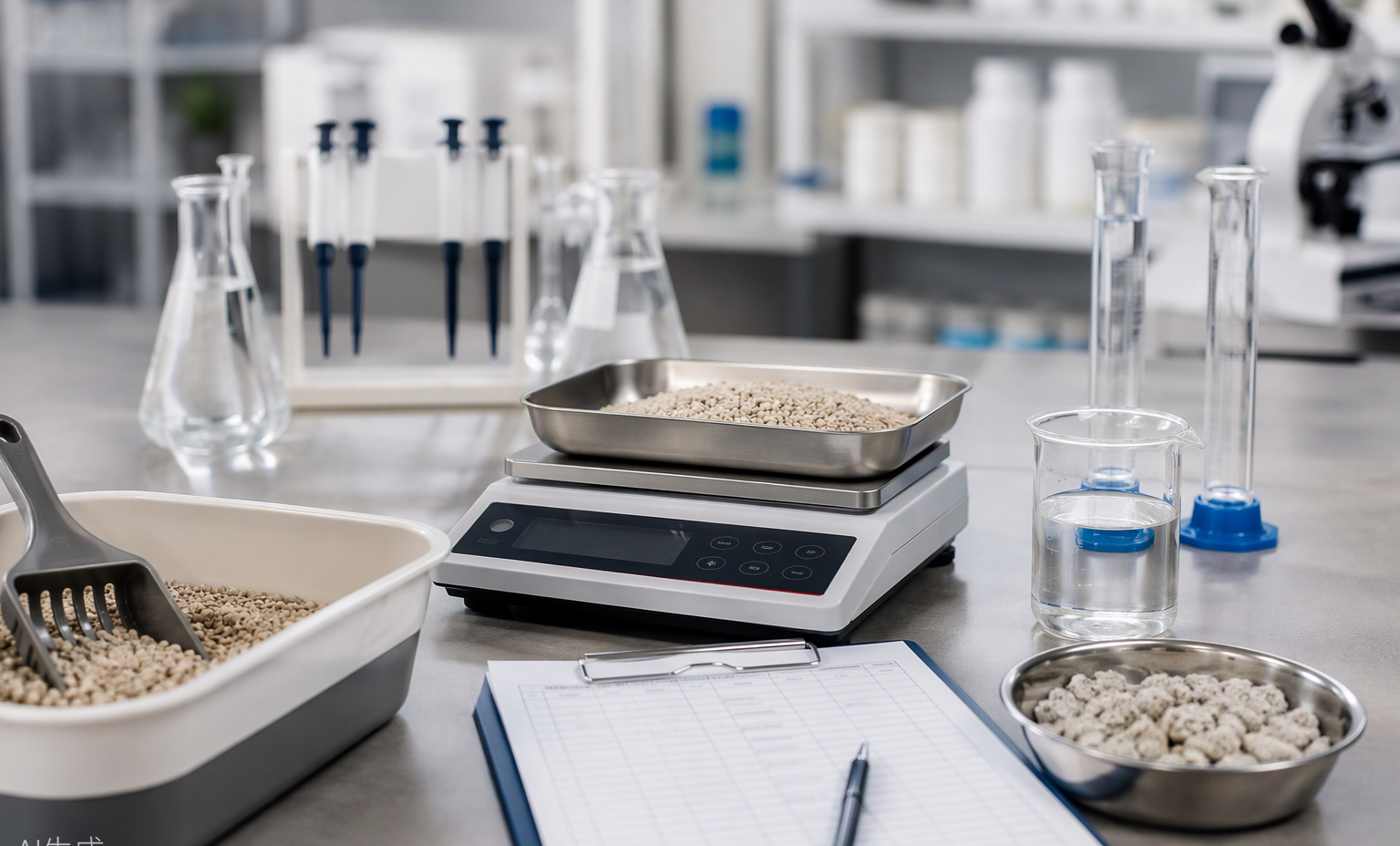


When you approve a sample and place a bulk order, one question decides whether the container matches the sample: does the factory test every batch, and what exactly do they test? Here’s a walk through the standard quality control tests for cat litter — useful both for evaluating suppliers and for writing your own product specification.
Clump Strength
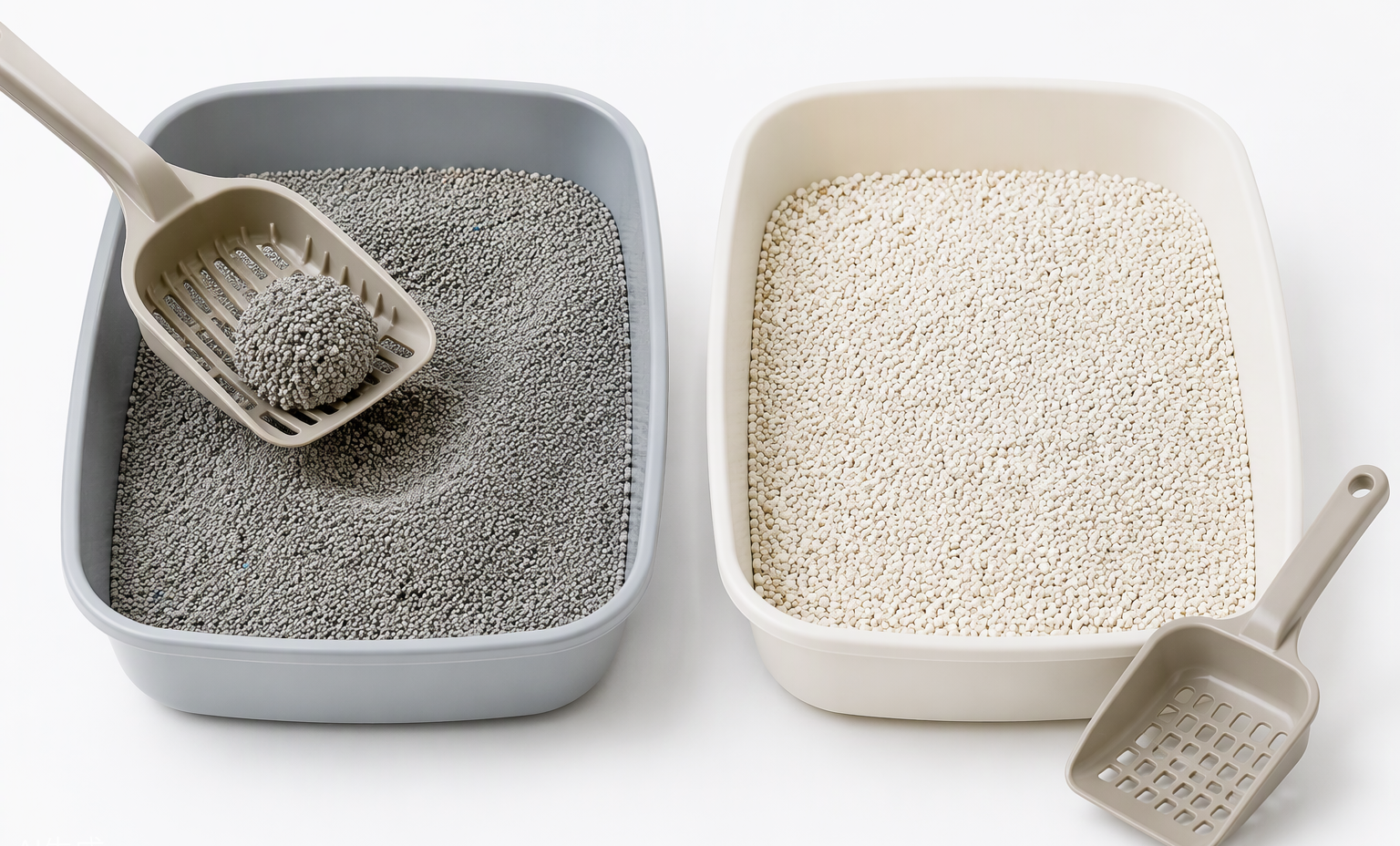
For clumping litters, this is the headline test. Technicians form a clump under controlled water dosing, then measure whether it holds together when scooped or dropped from a set height. Weak clumps break apart in the box, leave soiled fragments behind, and generate the most common consumer complaint in the category. Your spec should state a minimum clump strength, not just “good clumping.”
Absorption Rate and Capacity
Labs measure both how fast liquid is taken up and how much the granules can hold. Speed matters for surface clumping before liquid reaches the tray bottom; capacity determines how long a fill lasts. Both numbers should appear on batch reports for bentonite, tofu and silica alike.
Dust Content
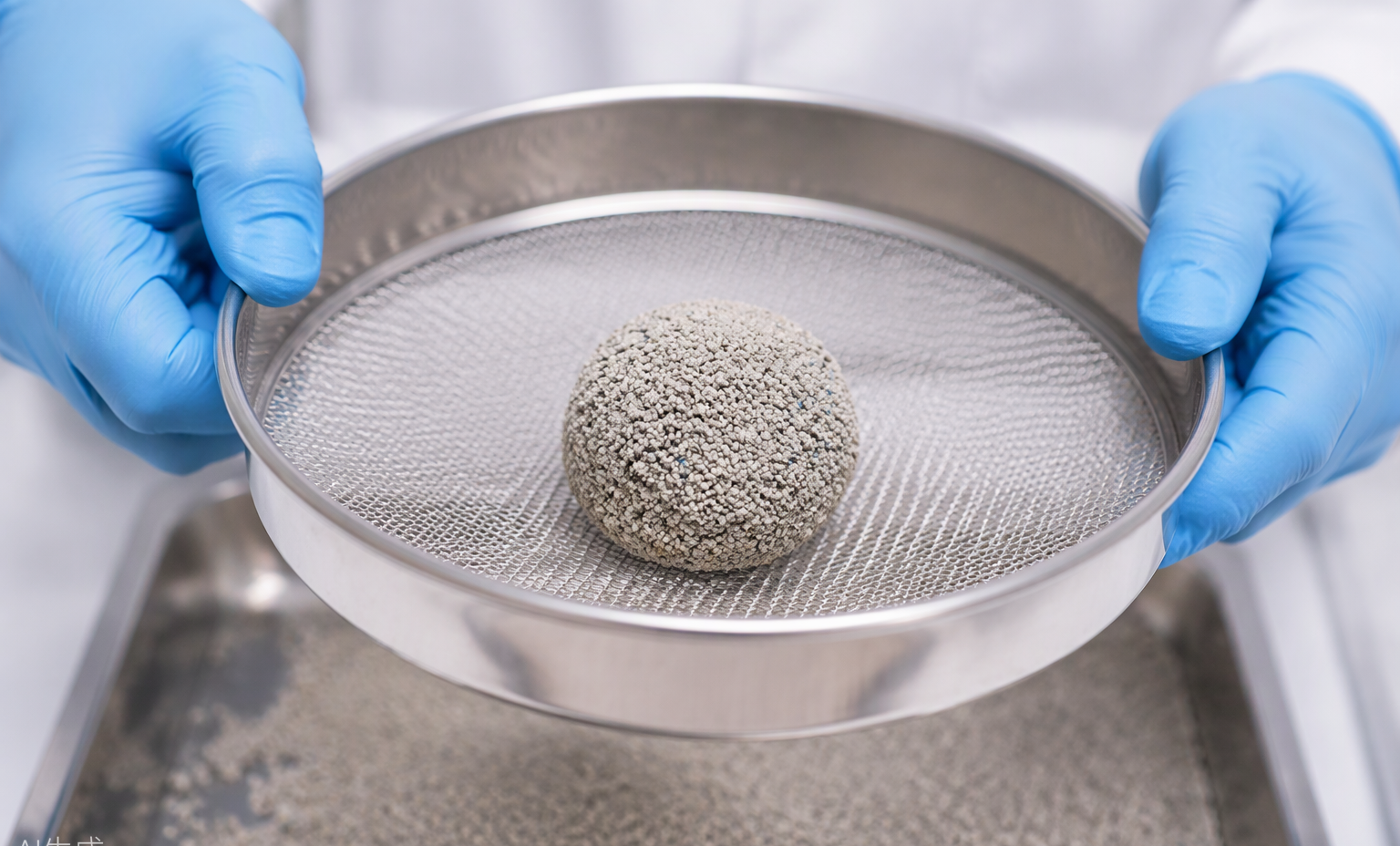
Dust is measured by sieving and weighing the fine fraction of a sample. High dust means tracking, dirty shelves and respiratory complaints from both cats and owners. It’s also a classic corner-cutting signal — excessive fines often mean the factory skipped a de-dusting pass. Set a maximum percentage in your spec.
Moisture Content and Granule Size Distribution
Residual moisture affects clumping strength, mold risk in plant-based litters and shelf life in transit. Granule size distribution, checked with stacked sieves, controls dust, tracking and how the litter feels under paws. Batch-to-batch consistency here is what makes a product feel “the same as last time” to a repeat buyer.
Odor Control and Hygiene Checks
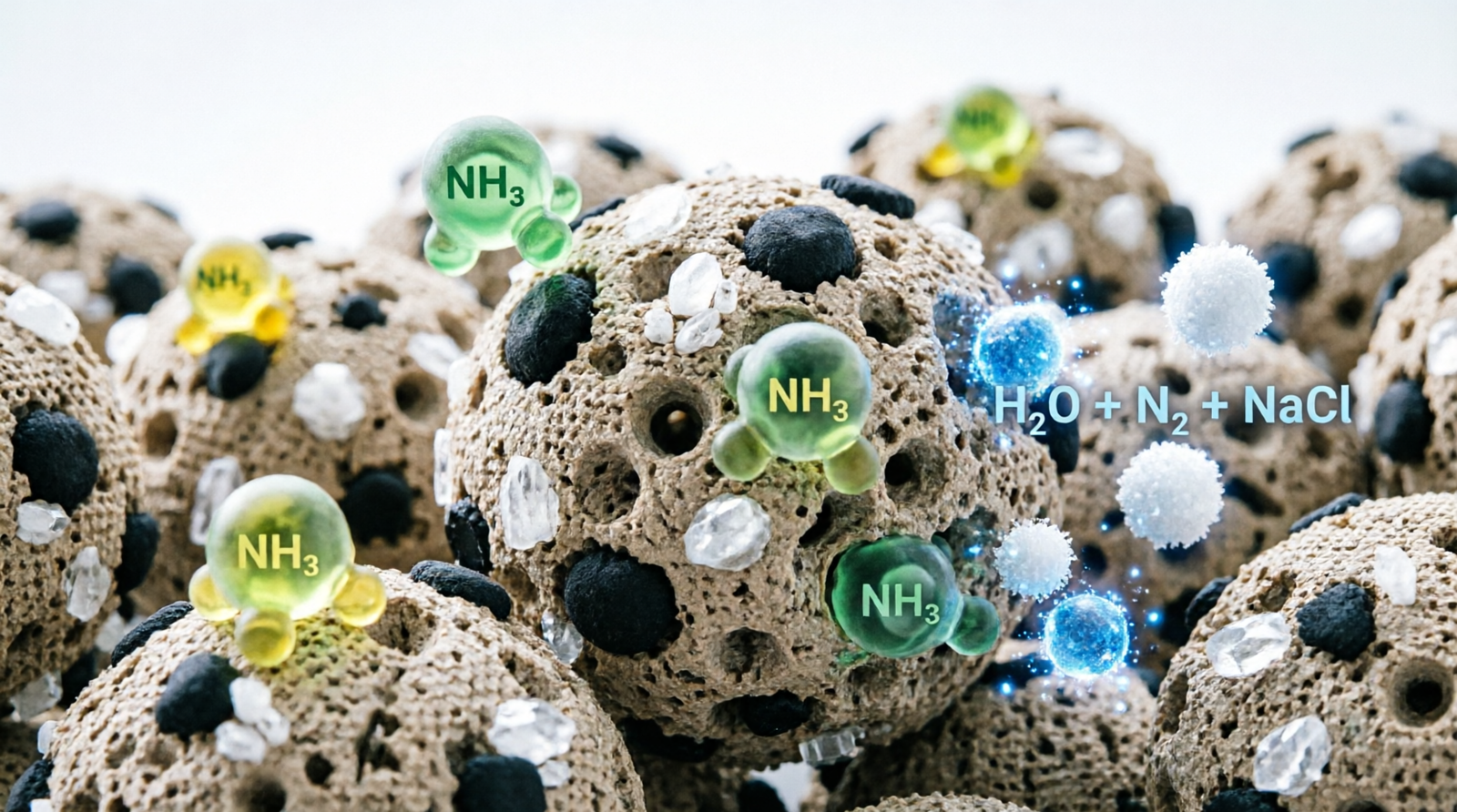
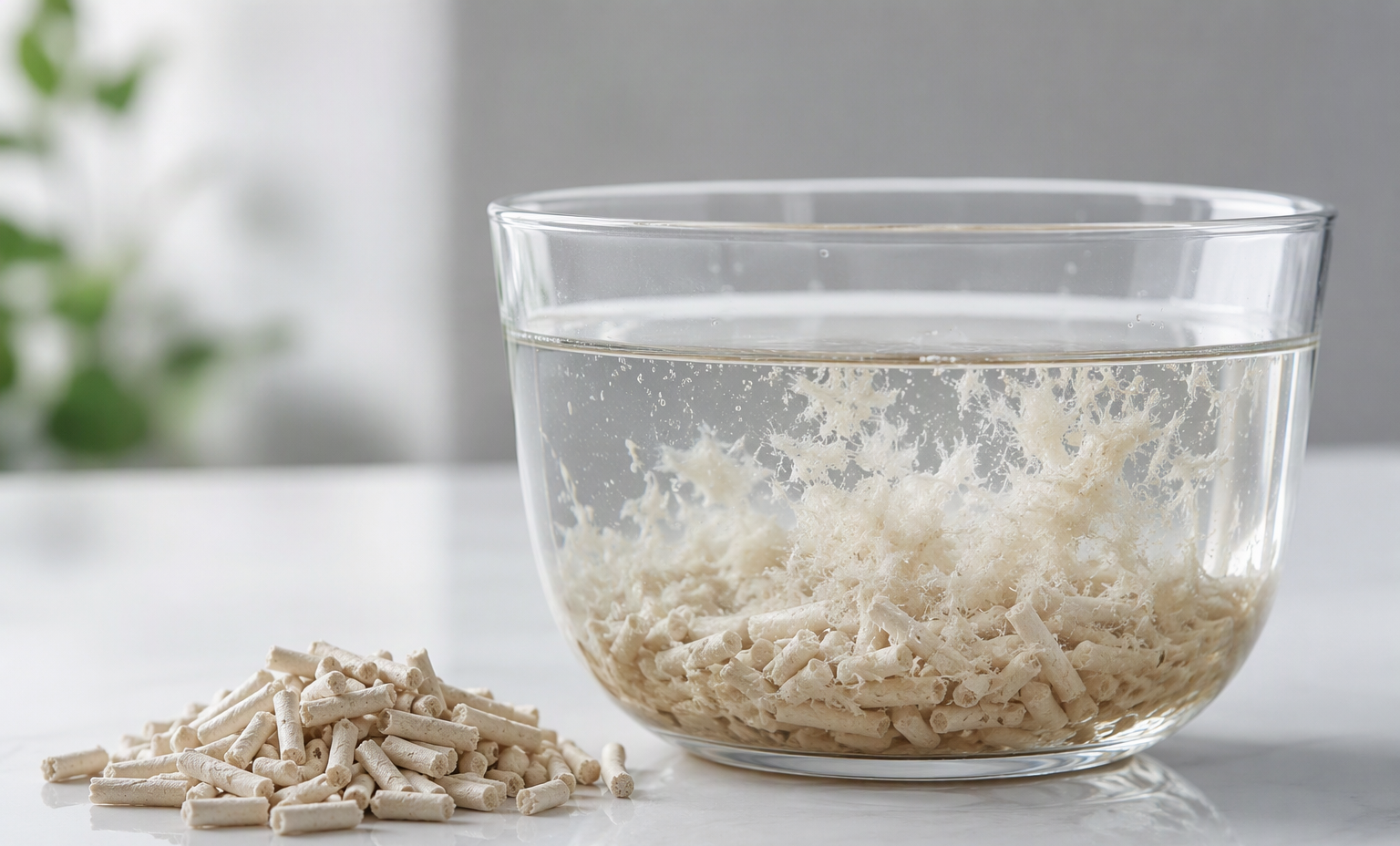
For litters marketed on odor control, some labs run ammonia retention tests to quantify how well the product traps the main odor compound. For plant-based litters, microbial checks guard against mold — a real risk when moisture creeps up during storage or sea freight.
What to Ask Your OEM Partner
Ask which of these tests run on every batch versus occasionally, whether you receive batch test reports, and whether the factory retains samples from each lot for traceability. For extra assurance, periodic third-party testing of shipped goods against your spec keeps everyone honest — a good supplier will welcome it.
At Acmic, every batch of our bentonite, tofu and silica cat litter goes through standard QC testing, and we share results with OEM and ODM partners. Contact us to request our test report format and product samples.