

Beyond Bentonite and Tofu: A Buyer’s Guide to Alternative Cat Litter Materials

Recent posts

Flushable Cat Litter: What the Claim Really Means for Private-Label Brands

Flushable Cat Litter: What the Claim Really Means for Private-Label Brands

The Rise of Private Label in Pet Retail: Why Store Brands Are Moving Into Cat Litter

The Rise of Private Label in Pet Retail: Why Store Brands Are Moving Into Cat Litter

Beyond Bentonite and Tofu: A Buyer's Guide to Alternative Cat Litter Materials

Beyond Bentonite and Tofu: A Buyer’s Guide to Alternative Cat Litter Materials

Comparing Cat Litter Quotes: Why the Cheapest Price Per Ton Can Cost You More

Comparing Cat Litter Quotes: Why the Cheapest Price Per Ton Can Cost You More

Inside the QC Lab: The Standard Tests Every Cat Litter Batch Should Pass

Inside the QC Lab: The Standard Tests Every Cat Litter Batch Should Pass

Why Cats Are Winning the Urban Pet Race — and What It Means for Litter Demand

Why Cats Are Winning the Urban Pet Race — and What It Means for Litter Demand

social share

Send Message

Beyond Bentonite and Tofu: A Buyer's Guide to Alternative Cat Litter Materials

Beyond Bentonite and Tofu: A Buyer’s Guide to Alternative Cat Litter Materials

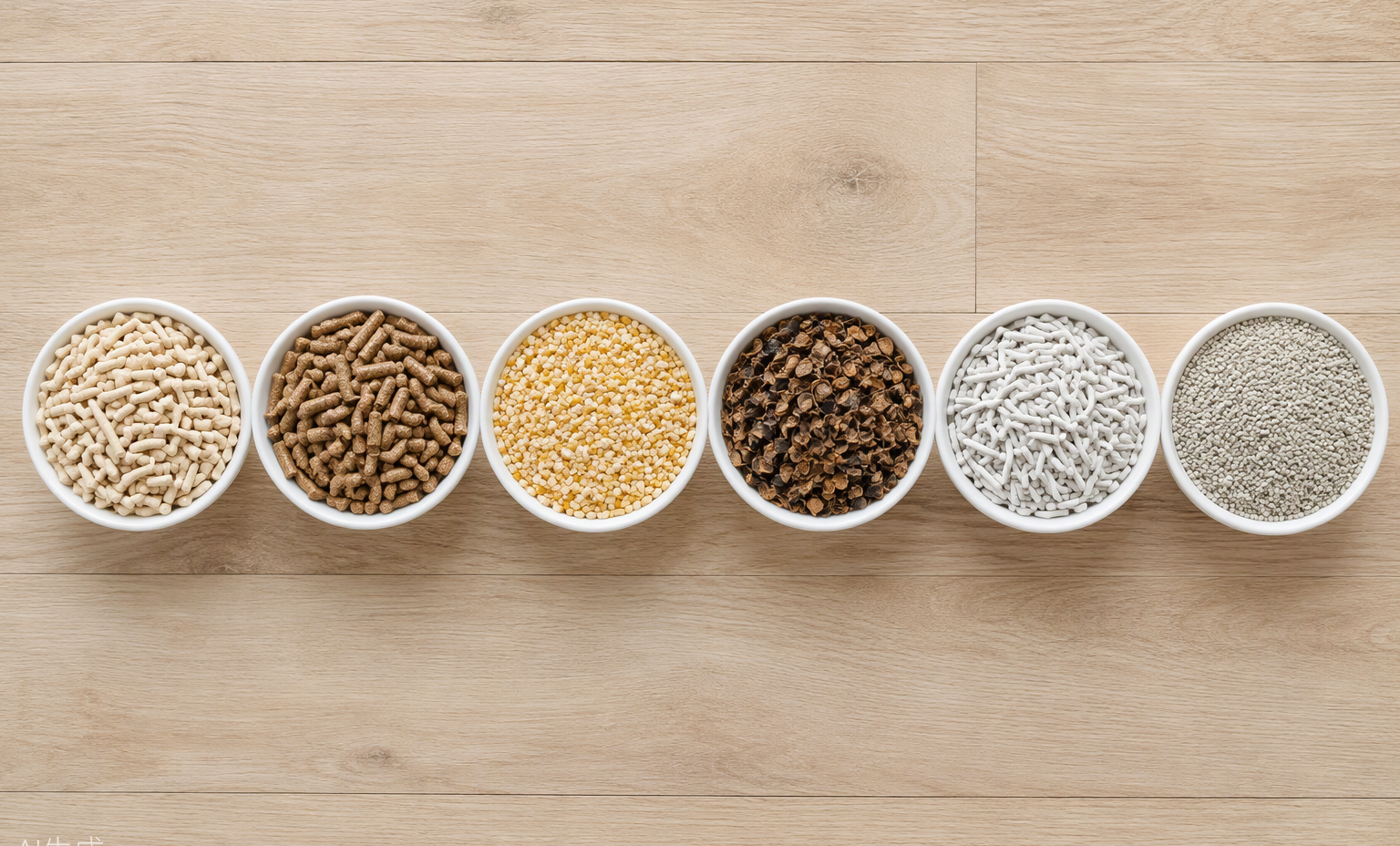
Bentonite, tofu and silica dominate the cat litter shelf — but they’re not the whole category. Wood, paper, corn, wheat and walnut litters all have loyal niches, and buyers increasingly get asked about them. Here’s what each material actually offers, and what to weigh before adding one to your range.

Wood (Pine) Pellets

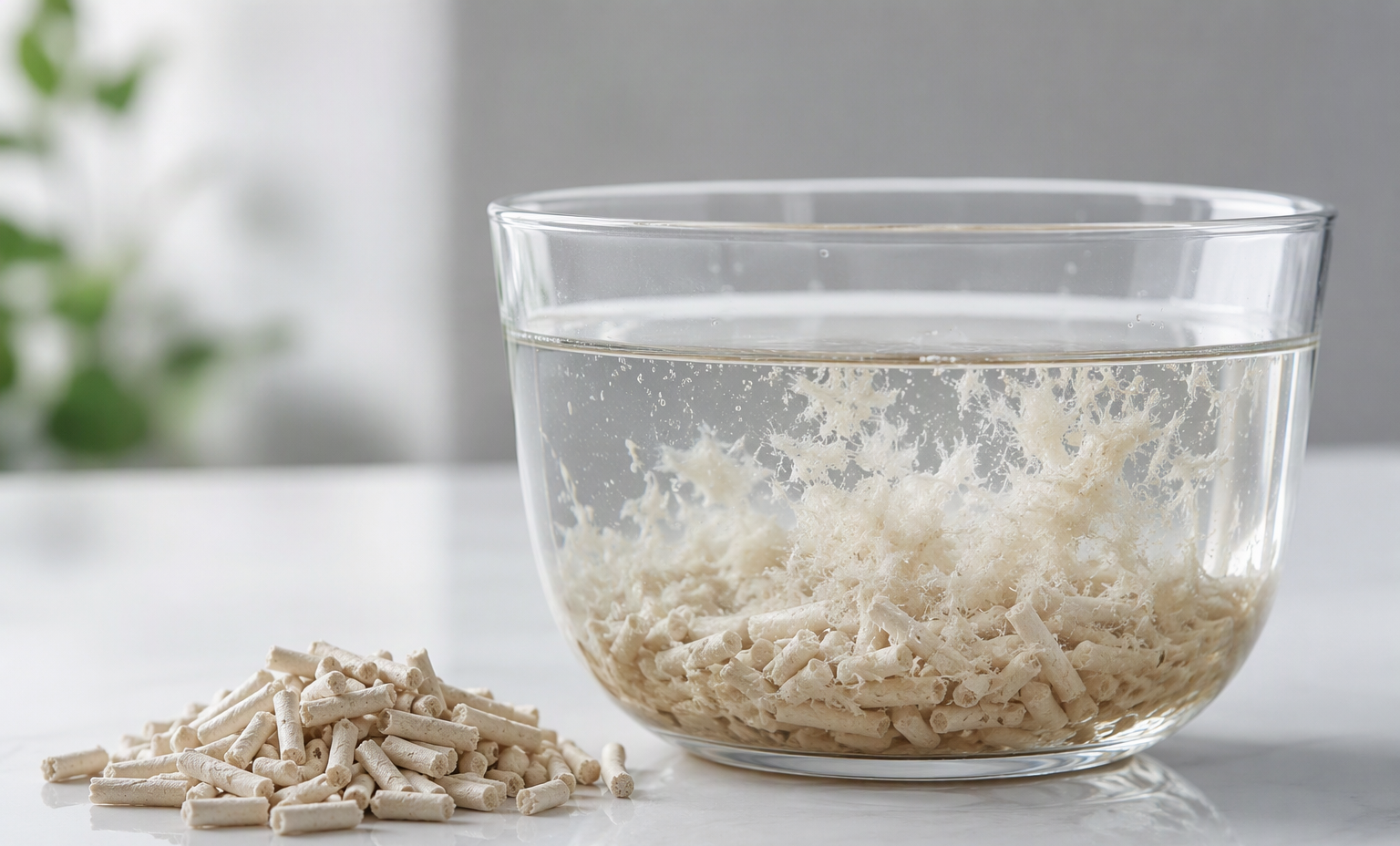
Made from compressed sawdust, wood pellet litter is affordable, naturally pine-scented and widely available. The pellets break down into sawdust as they absorb urine, which pairs well with sifting litter boxes. Downsides: it’s heavy, doesn’t form scoopable clumps in the classic sense, and the sawdust residue needs regular tray cleaning. It remains a strong economy and eco-positioned option in many markets.
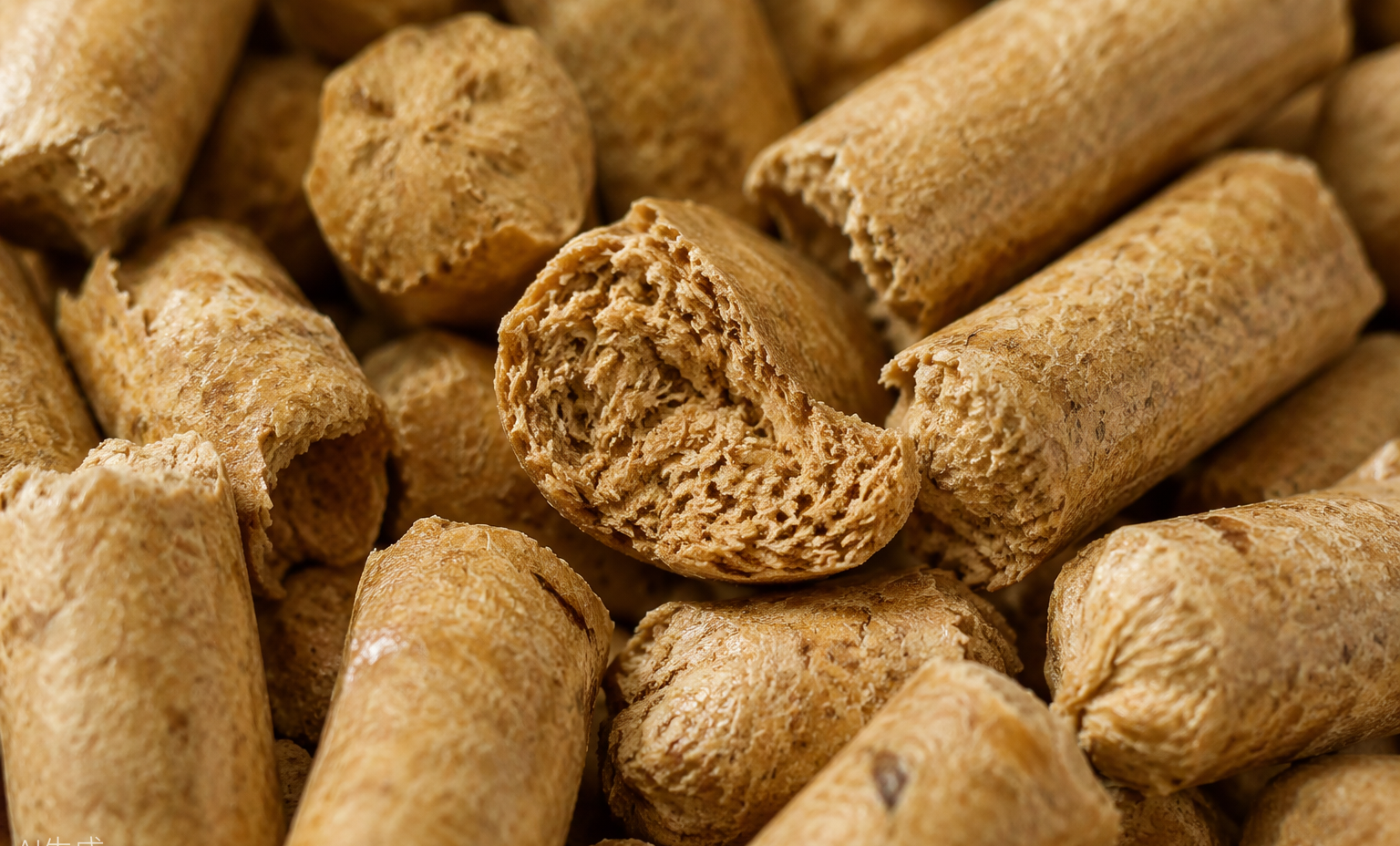
Close-up of compressed wood pellet litter showing its fiber texture

Paper Litter

Recycled paper pellets are soft, highly absorbent and extremely low in dust — which is why vets often recommend them post-surgery. The trade-offs are weaker odor control and higher cost per use, since saturated pellets need frequent replacement. Paper works best as a specialty SKU rather than a volume line.

Corn and Wheat Litters

Corn- and wheat-based litters clump naturally through their starch content and are typically marketed as flushable and biodegradable — the same positioning questions that apply to tofu apply here. Because they’re food-adjacent agricultural products, storage and moisture control matter: poorly stored grain-based litter risks mold and mycotoxin issues, so the manufacturer’s raw material handling deserves scrutiny.

Walnut Shell and Other Niches

Crushed walnut shell litter offers good odor control with a dark color that divides consumer opinion. Coconut coir, grass seed and cassava products round out the niche end. These can differentiate a premium range, but supply chains are thinner and consumer familiarity is lower — expect education costs.

What This Means for Buyers

Three questions decide whether an alternative material belongs in your range: Is consumer demand proven in your market, or are you paying to create it? Is the supply chain stable — agricultural materials swing with harvests and commodity prices? And does the manufacturer have real experience with that material, or is your order their learning curve? Always run samples through real consumer testing before committing to a full SKU.

At Acmic, our core production is bentonite, tofu and silica cat litter for OEM and ODM partners, and we’re glad to advise honestly on where alternative materials fit — and where they don’t. Contact us to discuss your range.

Leave a Comment

Your email address will not be published. Required fields are marked *

Related blogs

Flushable Cat Litter: What the Claim Really Means for Private-Label Brands

Flushable Cat Litter: What the Claim Really Means for Private-Label Brands

The Rise of Private Label in Pet Retail: Why Store Brands Are Moving Into Cat Litter

The Rise of Private Label in Pet Retail: Why Store Brands Are Moving Into Cat Litter

Comparing Cat Litter Quotes: Why the Cheapest Price Per Ton Can Cost You More

Comparing Cat Litter Quotes: Why the Cheapest Price Per Ton Can Cost You More

Inside the QC Lab: The Standard Tests Every Cat Litter Batch Should Pass

Inside the QC Lab: The Standard Tests Every Cat Litter Batch Should Pass

Why Cats Are Winning the Urban Pet Race — and What It Means for Litter Demand

Why Cats Are Winning the Urban Pet Race — and What It Means for Litter Demand

Custom Scents and Additives: How Cat Litter Customization Actually Works in OEM Production

Custom Scents and Additives: How Cat Litter Customization Actually Works in OEM Production

Deposits, Balances and Trade Assurance: How to Pay a Cat Litter Supplier Safely

Deposits, Balances and Trade Assurance: How to Pay a Cat Litter Supplier Safely

Clumping vs Non-Clumping Cat Litter: What Should Your Range Stock?

Clumping vs Non-Clumping Cat Litter: What Should Your Range Stock?

Where Cat Litter Raw Materials Come From — and Why Your Supplier's Sourcing Matters

Where Cat Litter Raw Materials Come From — and Why Your Supplier’s Sourcing Matters

How Cat Litter Odor Control Works: Activated Carbon, Baking Soda, Fragrance and More

Scroll to Top

Scan It

Scan It