
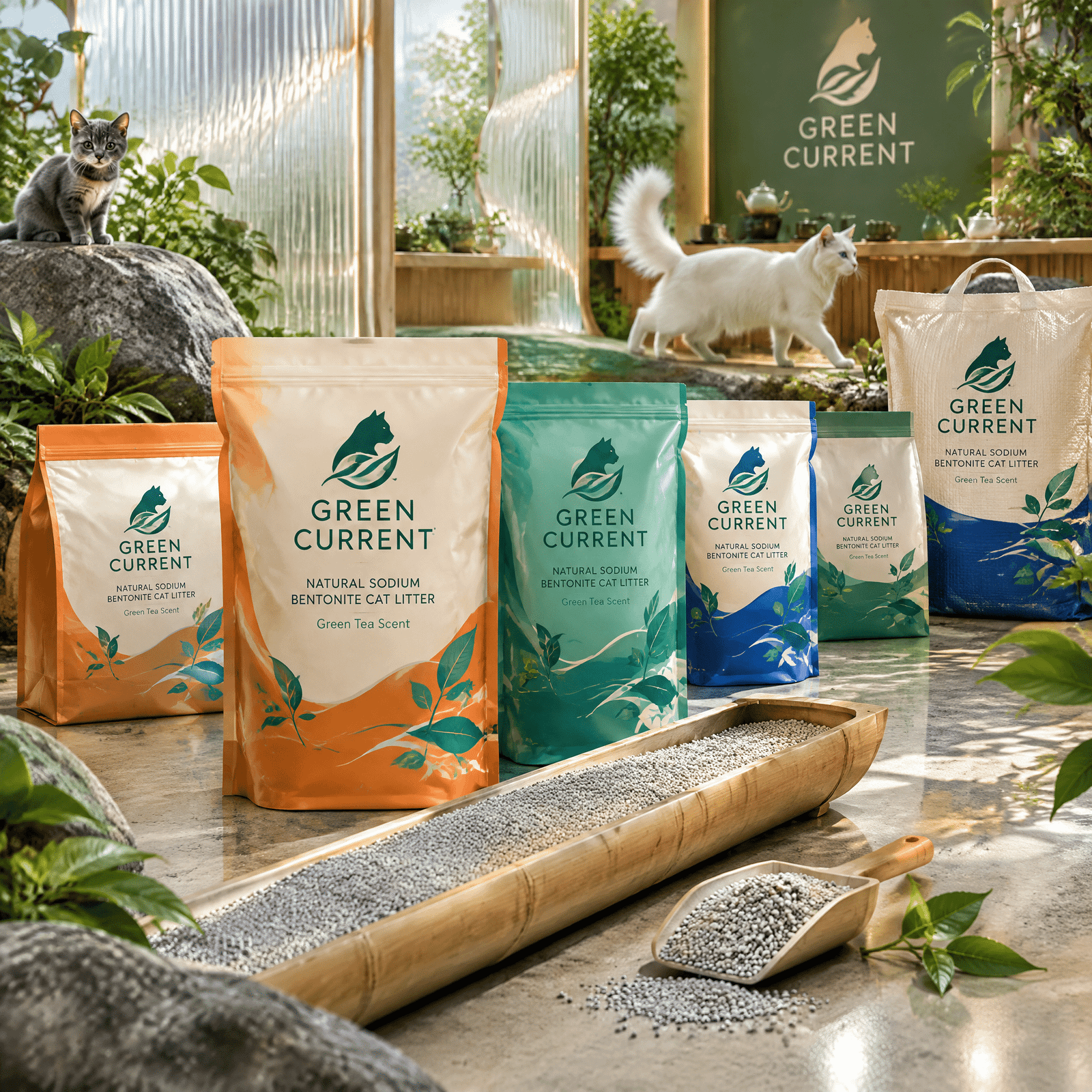
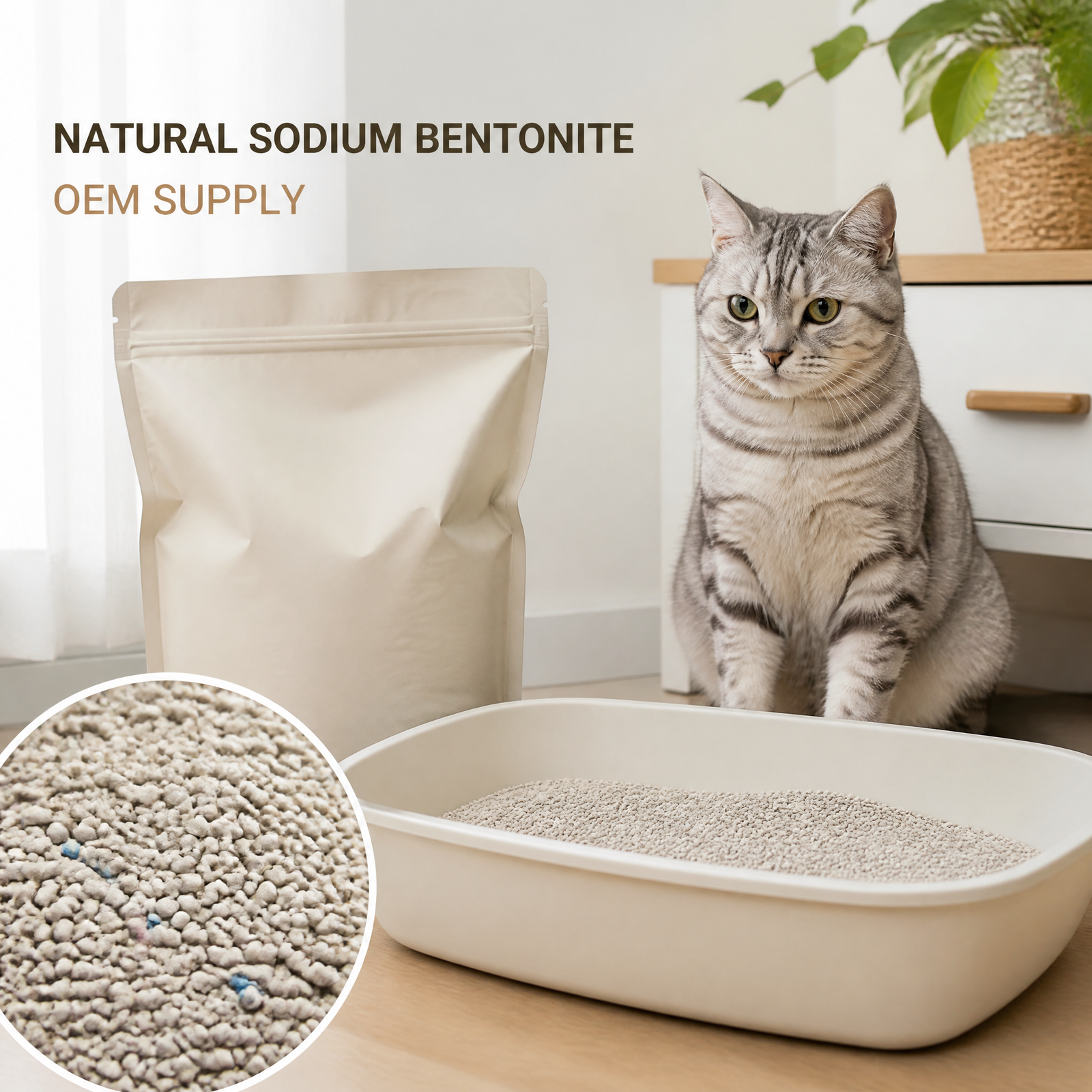



Bentonite clay remains the most widely used base material in cat litter worldwide, and for good reason: it’s the original clumping litter technology, prized for its strong odor control and tight, scoopable clumps. But not all bentonite is created equal — the type of clay, the processing method, and the additive package all determine whether a bag performs like a budget filler or a premium product buyers reorder. For OEM/ODM buyers evaluating a bentonite line, understanding the science behind the clump is the first step to specifying quality correctly.
The Clumping Mechanism
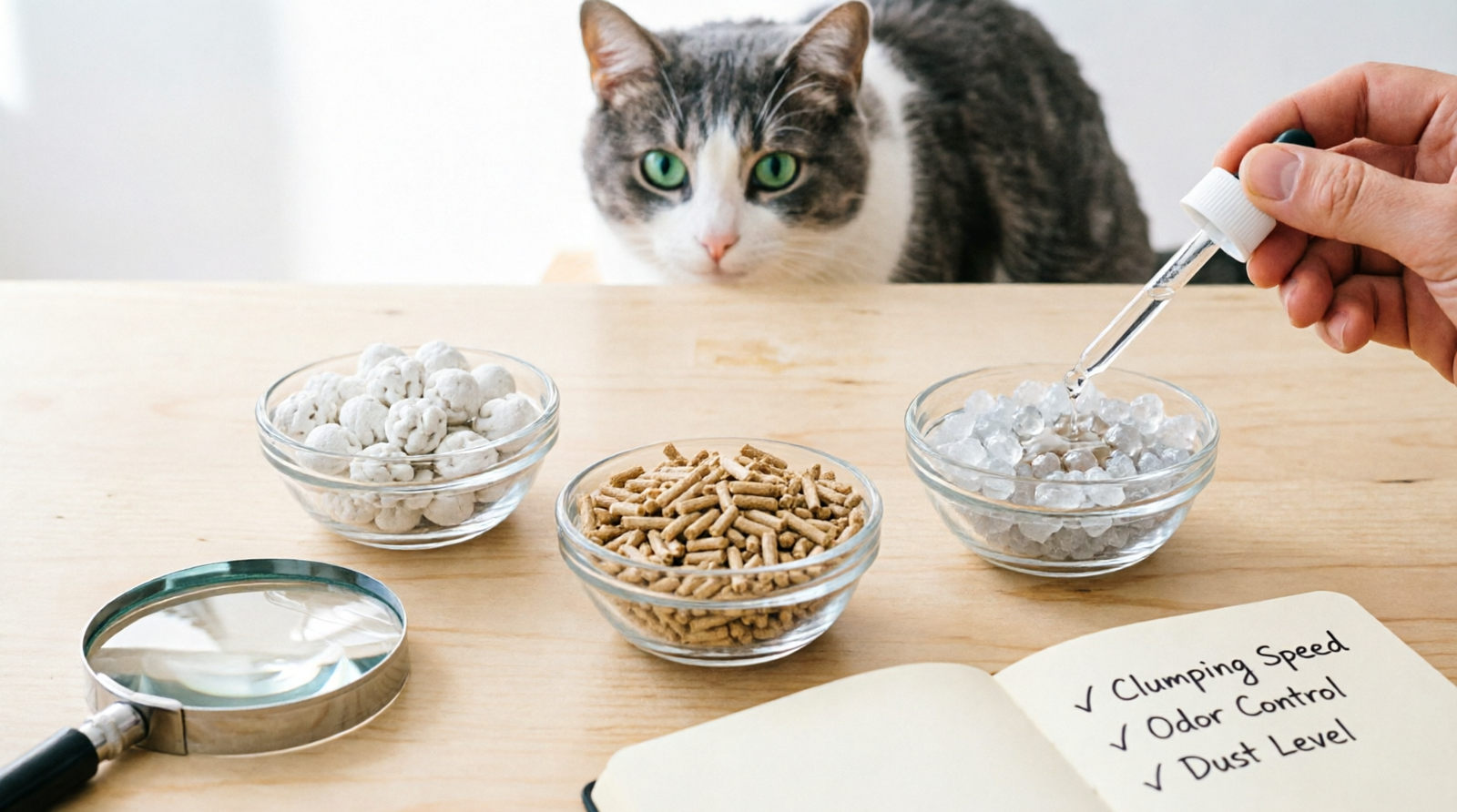
Bentonite is a swelling clay made mostly of the mineral montmorillonite. When it contacts liquid, water molecules slip between its layered crystal structure and force the layers apart — the clay physically expands and binds into a firm, cohesive mass. This is different from silica gel or tofu litter, which absorb liquid into a porous structure rather than swelling and locking together. That structural swelling is why bentonite clumps hold their shape well enough to lift out cleanly with a scoop, leaving the rest of the litter bed dry and reusable.
Sodium vs. Calcium Bentonite
The single biggest quality driver is which bentonite subtype goes into the formula. Sodium bentonite swells far more than calcium bentonite — often 8 to 15 times its dry volume versus roughl
y 2 to 3 times for calcium — which translates directly into harder, tighter clumps that don’t crumble during scooping. Calcium bentonite is cheaper and still usable, but it typically needs a higher clay ratio or added binders to match sodium bentonite’s clump strength, which raises the finished bag weight and shipping cost. Buyers should ask suppliers directly which subtype — and what blend ratio — goes into a given SKU rather than assuming “bentonite” means one consistent input.
Quality Factors Beyond the Clay Itself
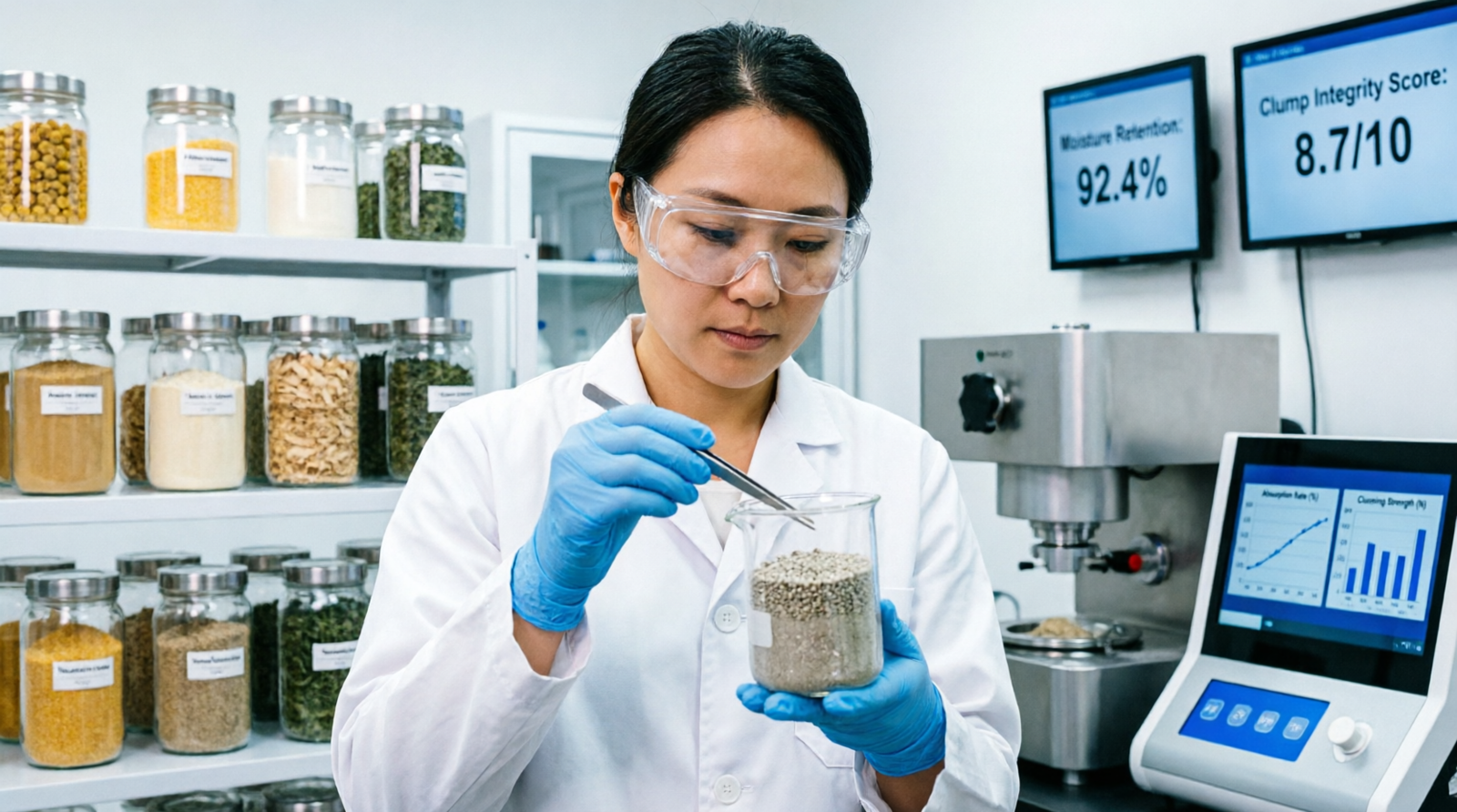
Raw clay quality is only part of the picture. Granule size and shape affect dust levels and tracking; moisture content at production affects shelf stability and clump consistency; and odor-control additives (activated carbon, baking soda, or fragrance systems) affect real-world performance between changes. A capable manufacturer tests clump strength, dust index, and absorption rate on every batch — not just at formula development — since raw clay sourced from different mines or seasons can vary even within the same supplier relationship.
What This Means for Private-Label Buyers
If you’re sourcing a bentonite line, ask for the sodium-to-calcium ratio, request clump-strength test data, and always evaluate a physical sample before committing to a production run. The clay is cheap; the engineering behind it is where the margin — and the customer loyalty — actually lives.